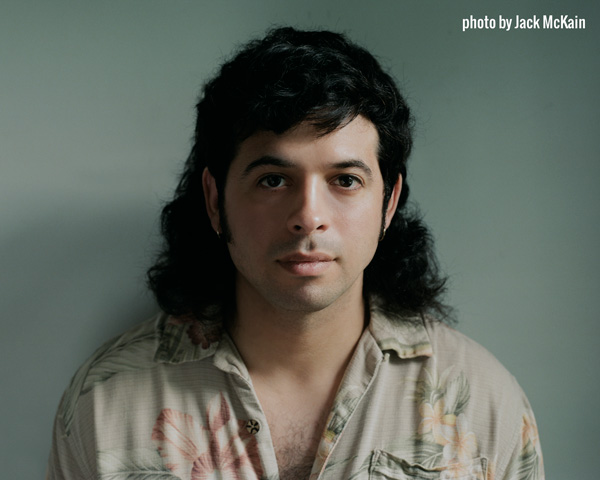

Daniel Swenberg
(PRINCETON, NJ) -- When The Dryden Ensemble presents Lachrimæ: In Praise of Tears on Saturday, January 31, 2026, audiences will be invited into a deeply expressive musical world shaped by two master songwriters separated by two centuries, John Dowland and Franz Schubert.
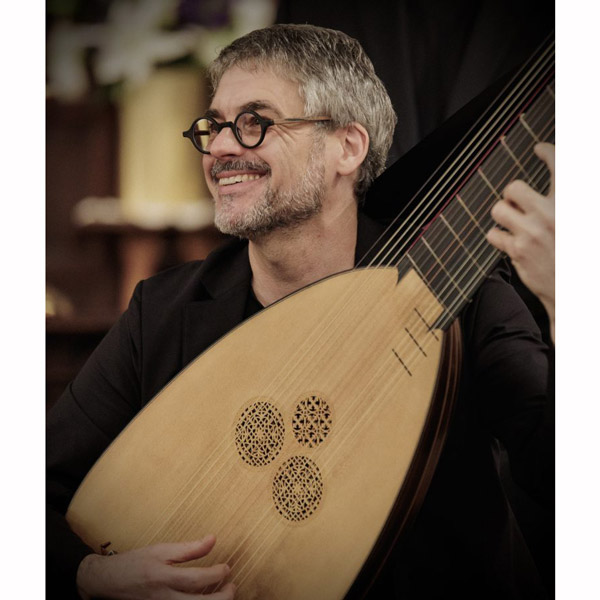
Featuring soprano Clara Rottsolk, Daniel Swenberg on lute and 19th-century guitar, and Lisa Terry on bass viol and cello, the program explores the emotional power of melancholy and why this music still resonates today.
At the heart of the concert is Dowland’s famous Lachrimæ melody, one of the most recognizable and influential themes of the Renaissance. “Dowland’s tune was celebrated throughout Europe,” says Daniel Swenberg, Artistic Director of The Dryden Ensemble. “Countless composers were inspired by it. With just four falling notes, like tears, it expresses grief, longing, and nostalgia. It can feel both extroverted and deeply intimate at the same time.”
Dowland later set words to the melody in his iconic Flow My Tears and composed seven variations on the theme, each revealing a different emotional shade. “The Lachrimæ theme creates an almost instant emotional response,” Swenberg explains. “With only four notes, it signals something deeply human.”
The program pairs Dowland’s music with Schubert’s Lieder, performed not on modern piano but on rare 19th-century guitars, creating a strikingly different sonic experience. “Biedermeier guitars have a more immediate attack and a broader dynamic range,” Swenberg notes. “They are lighter, closer in construction to lutes, and in many ways sound more like the fortepianos Schubert would have known than today’s Steinways and Yamahas.”
Swenberg will perform on two historical reproductions: an eight-string Viennese guitar from the Stauffer School, instruments Schubert himself owned, and a ten-string French décacorde modeled after early 19th-century designs. “These guitars have extended range and tunings more like a theorbo or baroque lute,” he says. “They open up colors and textures that simply do not exist on a modern guitar.”
Hearing Schubert’s songs this way brings audiences closer to how they were originally experienced. “Several of these songs were published in guitar editions that Schubert approved,” Swenberg explains. “They were widely performed in salons and homes, not concert halls. You will hear the songs as Schubert’s friends performed them at their Schubertiades, intimate gatherings of poetry, music, and company.”
That sense of closeness is part of what makes Lachrimæ feel especially right for a winter afternoon. “Schubert songs are perfect for being with friends and getting cozy,” Swenberg says. “That was the magic of the Schubertiade, sharing music and good company, maybe some drinks as well.”
Pairing Schubert with Dowland, he adds, “feels completely natural: two of the greatest art-song composers, two melancholy souls who gave us such beautiful, cathartic music. One of our songs is The Consolation of Tears, a perfect way to describe the experience.”
While the program includes moments of lightness, its emotional depth offers something especially meaningful right now. “These days, we could all use some beauty, some catharsis, and some like-minded company,” Swenberg reflects.
The Dryden Ensemble’s Lachrimæ: In Praise of Tears takes place Saturday, January 31 at Unitarian Universalist Congregation (50 Cherry Hill Road) in Princeton, New Jersey. Showtime is 4:00pm. Admission is free, donations gratefully accepted.
The Dryden Ensemble is a not-for-profit organization under section 501(c)(3) of the Internal Revenue Code and a registered charity in New Jersey. For information on how to become a supporter or sponsor of the Dryden Ensemble visit drydenensemble.org.