
Photo by Avery Brunkus
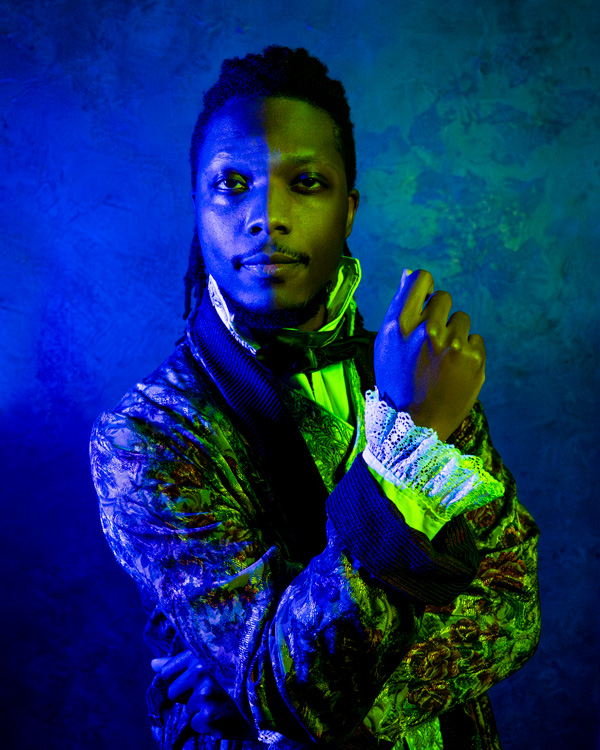
Jay Wade is starring as The Creature and Lord Byron in Mary Shelley's Frankenstein at the Shakespeare Theatre of New Jersey now through November 16, 2025. These are roles he's very familiar with having portrayed them at the Cincinnati Shakespeare Company and Merrimack Repertory Theatre as well.
The cast also includes Amber Friendly (Mary Wollstonecraft Shelly / Elizabeth), Neil Redfield (Dr. John Polidori / Henry), Brooke Turner (Claire Clairmont / Mother), and Sean-Michael Wilkinson (Percy Bysshe Shelley / Victor). Brian B. Crowe directs the production.
New Jersey Stage reached out to the St. Louis native to learn more about the roles and the production.
I guess few people know this play better than you. What's it been like developing the roles of Lord Byron and The Creature at the Cincinnati Shakespeare Company and Merrimack Repertory Theatre?
It was toward the end of last summer when I got the call about joining that co-production, and honestly, I was just excited to dive back into some classical work—especially something as timeless and powerful as Mary Shelley's Frankenstein. Then I read David Catlin's script, did a little research on his adaptation, and I was blown away. The way he weaves the Frankenstein story into that historic night in 1816 when Mary Shelley first imagined it—I thought it was dope concept that beautifully honored the spirit of the novel.
Playing both Lord Byron and the Creature has been an adventure, to say the least. They're wildly different roles that stretch me in opposite directions, and that's been both terrifying and exhilarating. I thought coming back a year later would be like slipping into an old coat—but apparently that coat had grown a few new layers while I was gone. Even now, as we get closer to opening, I keep finding new details, new emotional corners I hadn't explored before.
And I have to give a huge shout-out to the Cincinnati Shakespeare Company and the Merrimack Repertory Theatre. Both are phenomenal companies, and I'm genuinely grateful to have been part of their beautiful collaboration.
What can you tell us about the play?
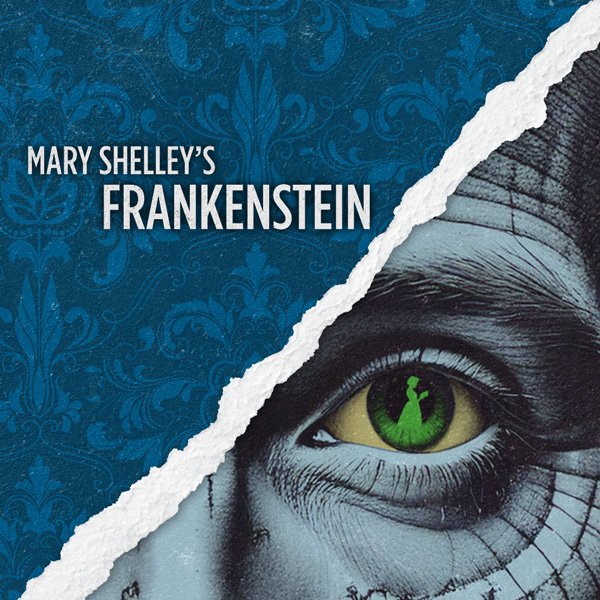
Well, without giving too much away, I'll just say this adaptation stays true to Mary Shelley's original novel—and then some. As I mentioned earlier, David Catlin takes a really inventive approach by weaving Frankenstein into that infamous night in 1816—the so-called "year without a summer." You've got Mary Godwin (soon to be Shelley), her fiancé Percy, her stepsister Claire Claremont, Lord Byron, and Byron's physician John Polidori all stuck indoors thanks to the endless rain. Byron, being Byron, decides the best way to pass the time is for everyone to tell ghost stories. And out of that stormy night, Frankenstein—the very first work of science fiction— was born. So if you're a fan of the novel, this play will definitely be right up your alley. But beyond that, I think it really dives into the duality of human nature—the light and dark within all of us—and asks whether those parts are something we're taught, or something we're born with.
Frankenstein is one of the most recognizable names in fiction and horror. Was it a bit daunting to first step into that role?
I have to be 'that guy' for a second and correct a common misconception—Frankenstein is actually the scientist, not the Creature! So that question might be better suited for my guy Sean-Michael Wilkinson, who's playing Victor Frankenstein himself. That mix-up has honestly been one of my biggest talking points when I tell people about the show. Pop culture has trained us to picture the big green guy with the flat head and bolts in his neck, and we forget that the Creature and the scientist are two very different beings. But understanding that difference is key to understanding their journeys. Stepping into the role of Frankenstein's creation was definitely outside my comfort zone. Normally, when I take on a character, it's about breathing life into someone who already exists on the page—someone with human fears, wants, and flaws. Within a script, those circumstances are usually a given. But in this case, the challenge was the opposite: how do you breathe life into something that was once dead? How do you find humanity in something the world doesn't even see as human? Those were the first questions I asked myself when I got the role. More than anything, I wanted to give Mary Shelley's monster the poetic justice he deserves—to show him as both grotesque and beautiful, just as she wrote him. And honestly, that's still the most daunting part of the role: walking that line between horror and heartbreak.
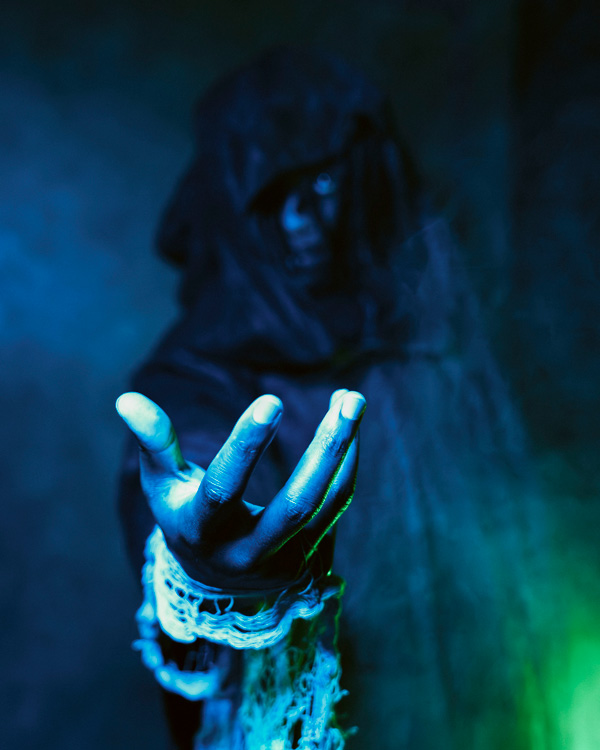
Photo by Avery Brunkus
Did you base your portrayal of The Creature on anything in particular? Did you watch any Frankenstein films as part of getting ready for the role?
Normally, I try not to watch other actors' takes on classic characters, just so I don't subconsciously borrow their choices. But let's be honest, you can't really be from planet Earth without having seen SOME version of Frankenstein, right? That said, my all-time favorite portrayal has to be Rory Kinnear's Creature in Showtime's Penny Dreadful. The show, and Kinnear's performance in particular, really honors the heart of Mary Shelley's novel. It captures those core themes of abandonment, isolation, ambition, and the desperate need for companionship. What I loved most was how the series initially sets up Victor Frankenstein as this charming, sympathetic hero—until the Creature appears and completely flips that perception. Kinnear brought this beautiful mix of eloquence and raw emotion to the role. His Creature was soulful, intelligent, and deeply human, yet still terrifying in his honesty. That balance really inspired me. I wouldn't say I'm recreating his version, but I definitely aspire to reach that same depth.
You play two roles: Lord Byron and The Creature. What is it like to play what I imagine are two very distinctly different roles?
They are absolutely two very distinct roles—but the funny thing is, once you start digging into them, you realize they're not as far apart as they seem. I think that's part of why Catlin chose to only utilize five actors. Everyone in that villa mirrors someone in Mary's story somehow, which all loops back to that idea of duality—light and dark, creator and creation, beauty and chaos. Byron's a great example of that. On one hand, he's this legendary Romantic poet, a revolutionary who literally fought for Greek independence. On the other, he could be... kind of awful. He carried around a lot of damage from his past, and you see that bleed into how he treats people. In the play, other characters even call him a "monster," which feels fitting in this eerie, poetic way. So yeah, playing both Byron and the Creature can feel like switching between two sides of the same coin—one fully human, the other struggling to become one. It's a strange overlap, but I think that's what makes it so interesting to live in.
What is the biggest challenge in playing The Creature?
Out of all the characters I've had the privilege to play, this is probably the first one where the biggest challenge isn't just the emotional journey—it's the physical one too. I like to think of myself as a movement-based actor; I'm fascinated by how the body can influence the mind, and how the psyche can shape the physical. With the Creature, it's all about charting that evolution—from his first moments of awareness, to learning how to move, to reacting to the world around him, and ultimately becoming the being we recognize. The hardest part is telling that story without relying solely on words—showing it through the body, through how he exists onstage. It's exhausting, but it's also incredibly rewarding to bring that transformation to life.
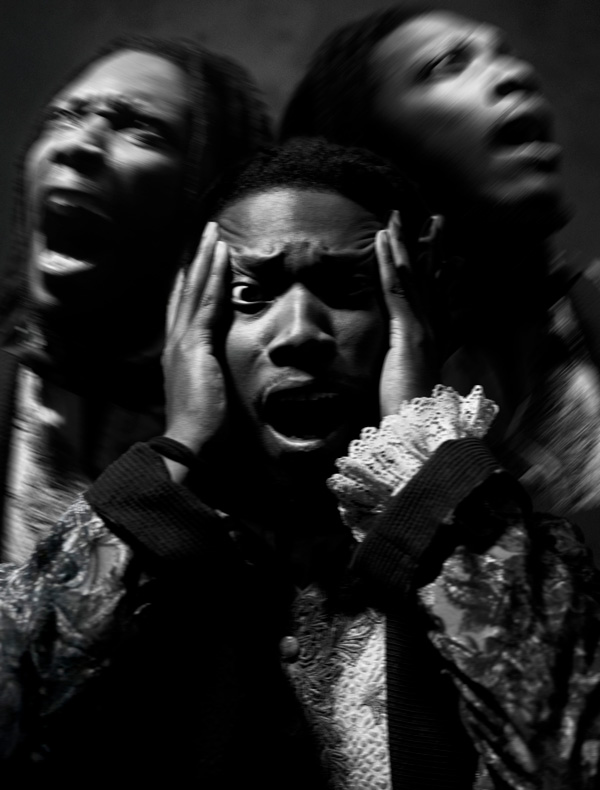
Photo by Avery Brunkus
How has working with director Brian B. Crowe been different than the previous productions with Brian Isaac Phillips as director?
Both Brians are incredibly smart, talented directors who know exactly how to pull a world off the page and onto the stage. They actually share a lot in common—they're both super detail-oriented—but the difference is in which details they focus on. With Brian Isaac Phillips, the direction felt very much rooted in the environment—how the characters live and breathe within the world of the play, how they interact, and how that world shapes them. Brian Crowe, on the other hand, zooms in a little closer. He's all about the individual character. Every rehearsal, he'd push us to go further—dig deeper into how our characters move, speak, and think. Especially in a show like this, where everyone's playing multiple roles, he really wanted those distinctions to be clear and specific. What's cool is seeing how their personalities feed into their process. BIP has this infectious excitement—he'll give you a note with this big grin, like he just discovered something he can't wait to share. Crowe's brain, meanwhile, runs at about a million miles an hour. He'll give you a flurry of ideas all at once, and sometimes you just have to let them marinate before they fully click. Both are brilliant, just in totally different rhythms.
The theater's website says the play has "moments of horror and stylized violence" - would you say it is scary? On a scale of 1-10 (with 10 being the highest) how scary would you say this play is?
It definitely has its moments, but I'd say the play is more poetically gothic than outright scary. It's a product of the Romantic era, and all the characters in it are drawn from that world—so you get all those big, sweeping themes: love, death, nature, freedom, imagination, and the struggle of the human spirit. And honestly, when you dig into those things, they can be just as unsettling as any jump scare. That said, the "scariest" part of our production might actually be the design—in the best way possible. The set, the lighting, the costumes—it all creates this eerie, immersive atmosphere. And Ariana Cardoza's sound design? Haunting. There were a couple of moments during tech where I actually jumped, and I knew what was coming. Her mix is that powerful. So yeah, I'd give it a solid 7 on the scary meter. It won't keep you up at night, but it'll definitely haunt you in a beautiful way.
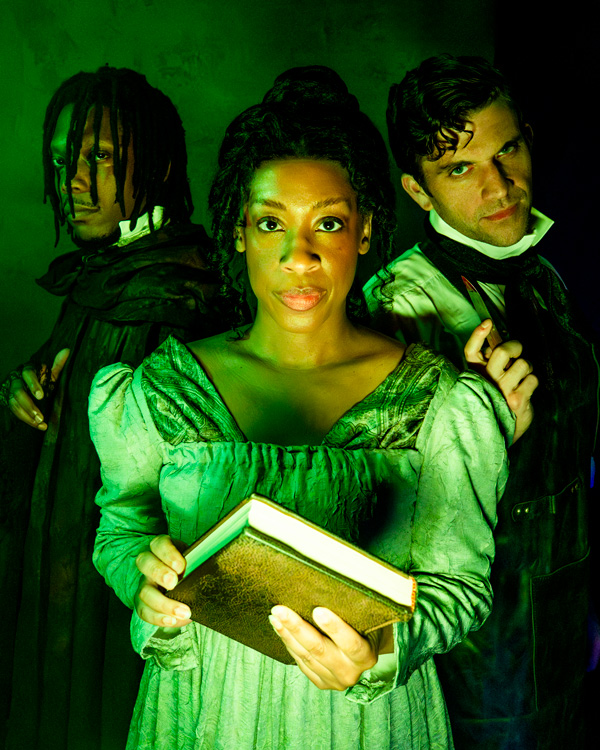
Photo by Avery Brunkus
Are you a horror fan yourself?
I'm a huge horror fan, probably to an unhealthy degree. If I'm sitting down to watch something, odds are I'm scrolling for a horror film first. My favorite subgenre is definitely anything supernatural or otherworldly. Don't get me wrong, I can appreciate a good slasher, but there's something way more unsettling about the idea of something that used to walk the earth coming back with unfinished business. I love when a film gives you that backstory—the history behind whatever spirit or creature is haunting everyone. There's something about understanding why it's happening that makes it ten times creepier. Give me a well-built mythology and I'm hooked. The richer the history, the better the horror.
Tell me a little about yourself. Where did you go to college?
I was born and raised in St. Louis, Missouri ('Sko Blues!), but I've been based in Chicago for the past five years. I earned my BFA in Acting from Southeast Missouri State University at the Dobbins Conservatory. During my final semester there, I booked my first professional gig—a co-production of Pipeline by Dominique Morisseau with the Alabama Shakespeare Festival and Ensemble Theatre Cincinnati. That show really opened the door to my relationship with the Cincinnati theater community and kicked off my professional journey.
What are some of your favorite roles? What is the role you're hoping to play some day?
As I mentioned earlier, I've always been drawn to roles that feel completely outside my own personality. My favorite so far has to be Iago in Othello. It was my final college performance, and it's one I still think about often. That role really solidified my path—it showed me how much magic can happen when I challenge myself and lean into the uncomfortable. And honestly, I look forward to the day I get to play Iago again. He's one of those roles that keeps revealing new layers the older you get, so it'll be exciting to see what I find next time around.
Photo by Avery Brunkus
Performances run October 22 through November 16, 2025 at F.M. Kirby Shakespeare Theatre (36 Madison Avenue) in Madison, New Jersey on the campus of Drew University. Tickets are available for purchase online.