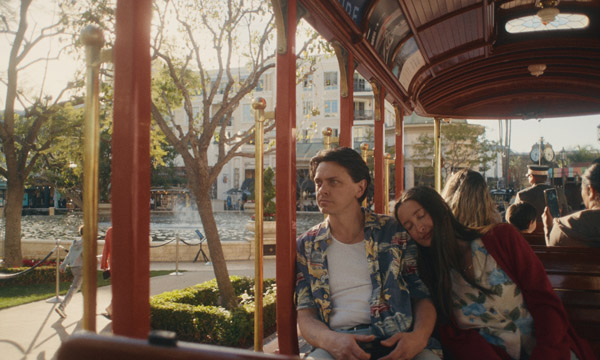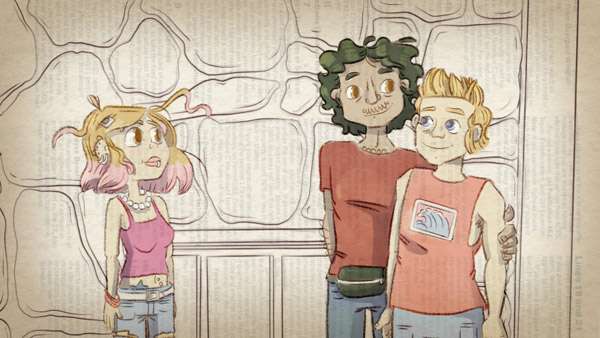

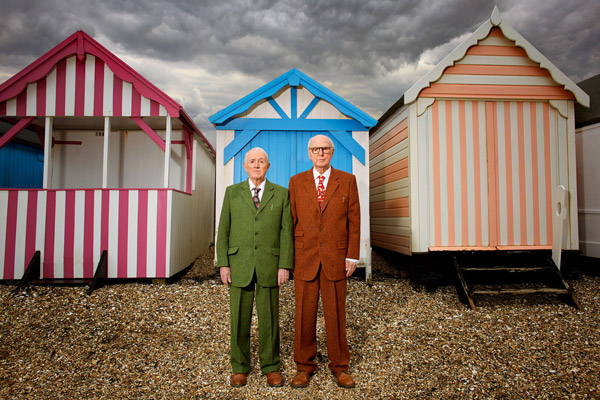
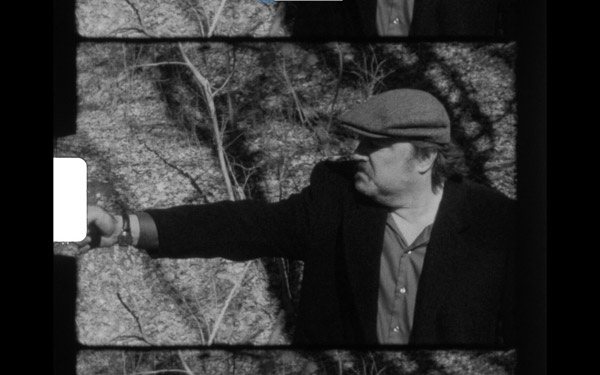
Still from Iain B MacDonald's Gilbert & George Daytripping Forever!
Now in its 38th year, the United States Super 8mm Film + Digital Video Festival is the largest and longest running juried festival of its kind in North America. The festival encourages any genre (including animation, documentary, personal, narrative, and experimental) made on Super 8mm/8mm film, Hi 8mm/8mm, or digital video. The festival will be held Online and In-Person at Rutgers University on February 21+22, 2026.
Super 8mm film was introduced in 1965 by Eastman Kodak at the World’s Fair in New York to help the average person document their everyday lives. Super 8mm was most widely used for filming home movies between the mid 1960s till the early 1990s. Today amateur usage of Super 8mm has been replaced by digital video but the format is still regularly used by filmmakers, artists, and students. Some hope to imitate the look of old home movies. Others want to create alternative looks for flashback sequences and altered states of consciousness. Some just like the idea of creating images in the classic style of using actual film. Super 8mm is a relatively inexpensive film, making it popular among filmmakers working on a low budget who still want to achieve the look of real film. Super 8mm has become quite common in theatrical features. You can see Super 8mm images in James Mangold's 2024 docudrama on Bob Dylan A Complete Unknown. J.J. Abrams 2011 film Super 8 pays homage to the little film format. Guy Maddin’s surreal 2006 film Brand Upon the Brain and Jim Jarmusch’s 1997 film Year of the Horse -- a documentary on Neil Young’s band Crazy Horse -- use it too.
I fell in love with Super 8mm when I started making films in 1982. I liked the fact that you were pretty much in control of every aspect of the filmmaking process. I could even develop the film myself. It was the DIY aspect of Super 8mm that first lured me in, but it was the grainy, oneiric (dreamlike) quality of the film stocks that sold me on this format. I have since made over 35 short (mostly experimental) films using Super 8mm. I started touring my work and showing it all over and then met two of the biggest Super 8mm film supporters in the USA. They are the husband and wife team of Bob Brodsky and Toni Treadway. They founded and ran the International Center for 8mm Film and Video in Massachusetts for over 30 years. Through their non-profit organization they subsidized many Super 8 filmmakers by sending them to film festivals in the USA, England, France, Venezuela, Brazil, Canada, and others. It was thanks to them that I got to visit so many wonderful festivals and countries. The largest United States-based Super 8mm Film Festival in the 1970s and 1980s was the one in Ann Arbor, Michigan. Bob and Toni sent me there to show a package of experimental films that I had curated in 1986 but by 1988 the people who ran this legendary festival decided they were going to cease operations. Bob and Toni suggested that I create one at Rutgers since I had set up the Rutgers Film Co-op/New Jersey Film Festival back in 1982. So, I did and called it the United States Super 8mm Film Festival. The first of these was a curated program where I invited Super 8 filmmakers that I admired to screen their work but the 37 that followed were juried festivals where a panel of judges picked the winners.
The Festival has changed over the last three decades going from screening Super 8mm films exclusively to then including Hi 8mm videos and now digital videos. Also, for over the past two decades Pro 8mm based in Burbank has been a major sponsor of this Festival. They provide a wide variety of Super 8 services and film stocks for filmmakers. I thought it would be nice to ask some of the filmmakers who are Official Selections in the 2026 United States Super 8mm Film & Digital Video Festival to talk about Super 8 and the films they are showing at this year's program. The filmmakers that I spoke to are Dan Lopez - they’re taking my house (USA); Joshua Boshell – Kway La Soul: Poetry in Chicago (USA); DT Kofoed – Les Amateurs (USA); Jeph Porter - The Empty Frame (USA); Iain B MacDonald – Gilbert & George Daytripping Forever! (UK); and A. Rosalie Chandler – Track (USA).
Nigrin: Tell us about your film that is a finalist in the 2026 United States Super 8mm Film & Digital Video Festival and why you decided to make it.
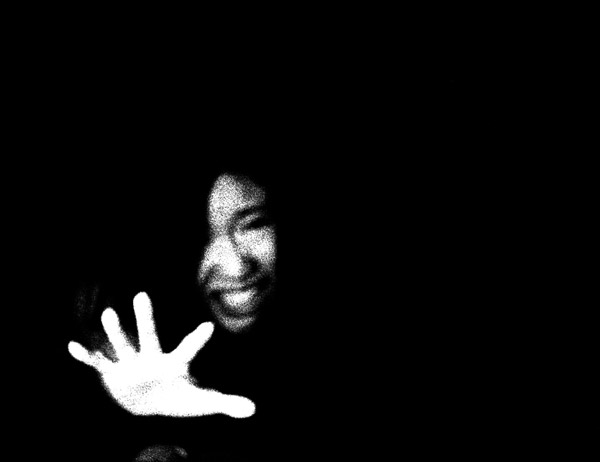
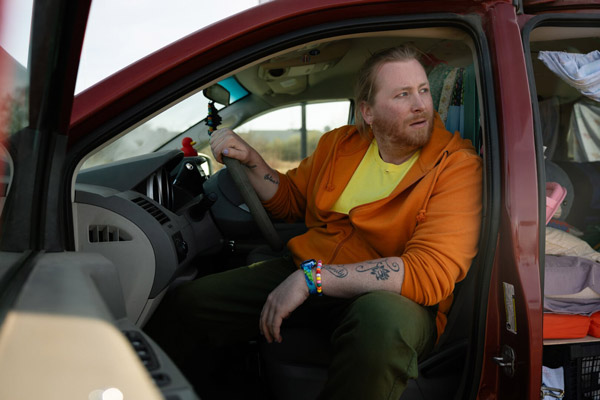
Lopez: My film, they’re taking my house, follows a woman trapped in a void who is being taunted by a malevolent telephone. She is trapped in a cycle, forced to carry out a mysterious routine in an endless loop – until the loop is suddenly broken. The catalyst to making this film came from my grandmother and her end-of-life care. My grandmother, a Cuban immigrant and political refugee, was as close to me as my parents were growing up. Watching a loved one’s mind and body deteriorate with age is gut-wrenching. The making of they’re taking my house served as a means to capture and illustrate my thoughts with regard to this period of her life.
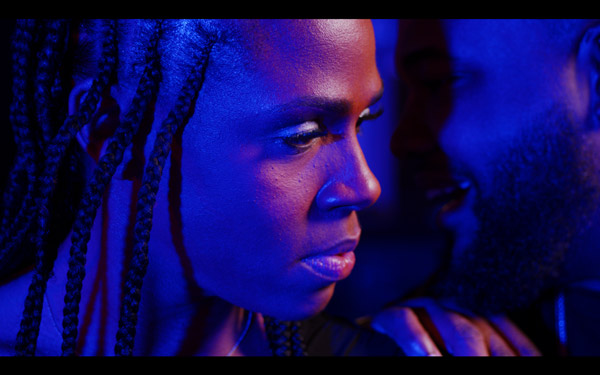
Boshell: Kway La Soul: Poetry In Chicago is the debut music video of Chicago rapper and artist Kway La Soul. I was drawn to his music and the equally ethereal and truly old-city vibes it echoed and wanted to take on the challenge of creating visuals on par with his whole vibe.
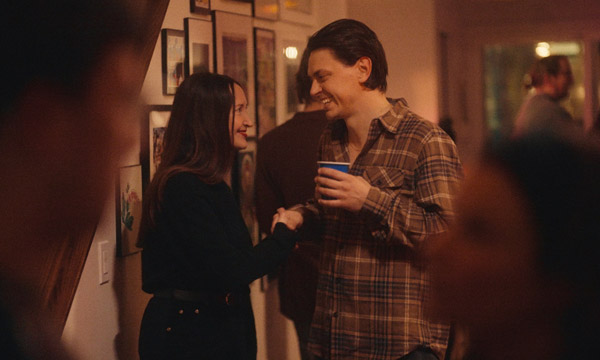
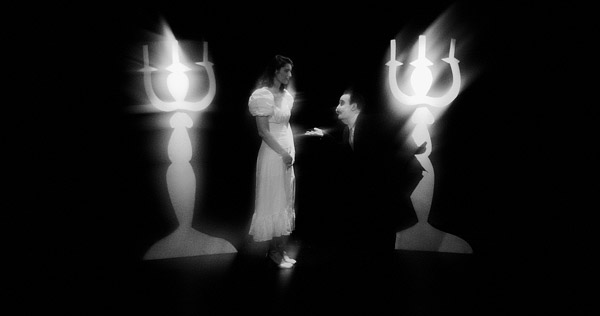
Kofoed: Thank you for the opportunity to talk about my film, which is almost as fun as making it and certainly easier. Les Amateurs is a dark comedy following a pair of bumbling, odd-couple crime enforcers trying to dispose of a corpse after their job goes wrong. My hometown festival here in Lansing, Michigan holds an annual Fortnight Film Contest, and a fortnight turns out to be just enough time to shoot a couple reels, get the footage back from the lab, and have a day or two for sound work. I shot my first reel of film for the prior year’s contest to a positive response, took the lessons learned, and made a better film for this edition. I’m now proudly ‘that guy who shoots on film’ in town. The story for Les Amateurs originated in a coffee shop conversation with actor/co-writer Michael McCallum, where I was debating even entering that year’s Fortnight contest. I told Michael a couple ideas kicking around in my head, and instead of developing any of those, we worked out the basic concept that became this film. As with my prior Super 8 shorts, I knew I wanted to shoot this as a single reel ‘Straight 8’ style: in sequence, editing with the camera trigger, every shot a single take. What you see is exactly what we captured. This was also an excuse to try out a different film stock, as I had only shot color negatives on my prior films.
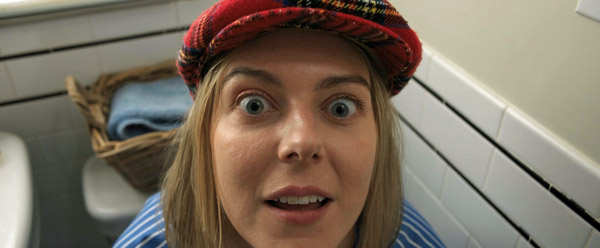
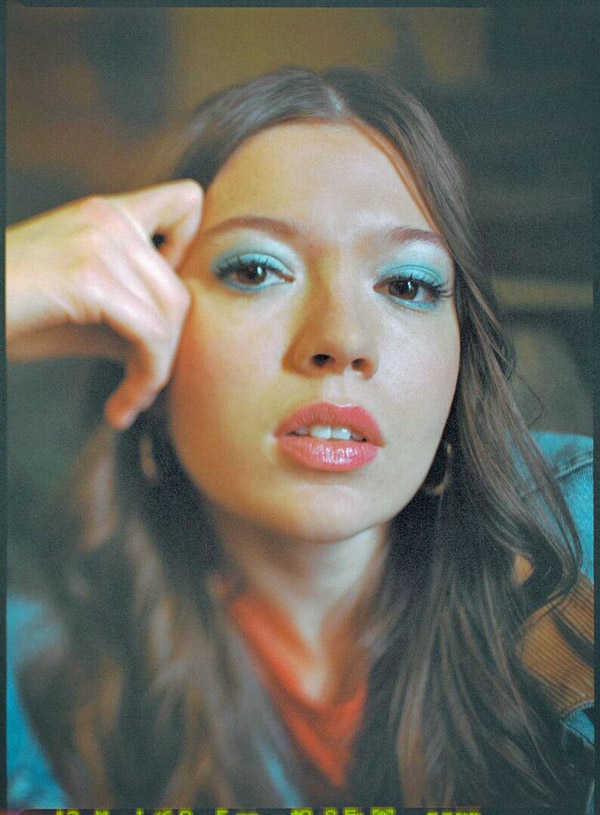
Porter: My film The Empty Frame is a short horror film heavily inspired by Italian Galo films of the 1970s. Specifically Dario Argento. I leaned into the lighting and music style a lot. I wanted to make this film pretty much because I wanted to try and shoot something on Super 8 for the fun of it. I'm a filmmaker and have made hundreds of short films and other projects but hadn't shot anything on film since my film school days. I like to challenge myself and shooting on Super8 seemed like a fun way to do that. And it was!
MacDonald: Gilbert & George Daytripping Forever! is the last in a trilogy of films about the artists Gilbert and George as they embark on a daytrip to Southend-on-Sea, a seaside city along the Thames just outside London. Along the way they ask fundamental questions about life and their art. I met Gilbert & George when I was very young and pitched an idea of a short film to them. It took a few years to find the finance but that led to a 30-year artistic journey for me as I decided to first make a sequel, and then to complete the trilogy.
Chandler: My piece, Track, was shot in 2013, shortly after I broke up with a long-time boyfriend. I had moved to Astoria, Queens, from Philadelphia to be with him and we broke up within a year. I don't think I was conscious of it at the time, but now I see the track in Astoria Park as a symbol of "going around in circles" trying to make that relationship work. Another interpretation I see in it now is the idea of meeting someone, getting married, having kids, etc. as a track that we can get set on in life. When the camera exits the track, the imagery becomes dizzying yet beautiful, and that is how my life felt for years after the break up while I tried to find my own place in New York City. I had no real intention or concept when I went out to shoot this roll of film. It just seemed like a moody, desolate thing to do with a roll of black and white film. I didn't get the roll processed for at least five years after shooting it. Money was tight. Finally in 2018 or 2019, I sent it out to be developed with a few other rolls of film. I got the footage back and it was cool to see it finally, after all those years but I didn't really think of doing anything with it. As I've started doing more editing work for my day job and side job, I became more familiar with the sites for getting royalty free music. When I found this piece of music I was finally inspired to make the piece. I had also just set up my FilmFreeway account and was excited about there being a festival with a super 8 focus in NJ. That was what really gave me the push to complete the piece and try getting it out into the world. I'm so excited that it was accepted!
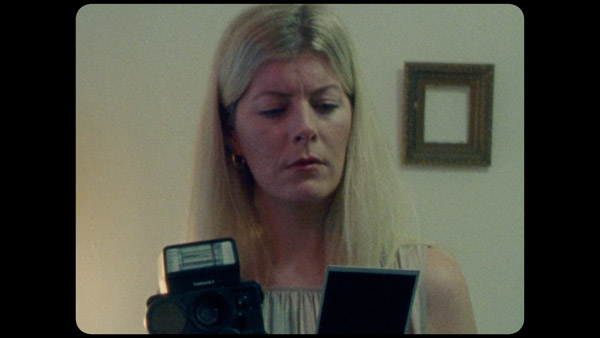
Still from Jeph Porter's The Empty Frame
Nigrin: Why did you use Super 8mm for your film?
Lopez: I’d carried the idea for the film for months, if not years, in my head. I had always pictured this story being captured on film. Analog film emanates a sort of haunting spirit, like how I imagine capturing a ghost on camera would feel. On an even simpler level, I like to take any opportunity I can to utilize physical film. No amount of digital post-production processes can match the analog aesthetic. While I also shoot digitally, I feel the process of capturing and developing your own film is unmatched.
Boshell: Very early on—even before I was officially attached to direct the project—Kway established that he wanted to shoot his first music video on film. I rarely get the chance to shoot on film in this day and age; in fact the last time I actually shot on film was on a Bolex back in film school, and I never saw the results of the shoot. Most of my favorite films were shot on film, and I believe all of my favorite directors shot their first films on Super 8mm; there is a magical, primordial precedent to it. Needless to say I was excited about the idea of shooting on Super 8mm for the first time ever and playing outside of the 100% digital world that I was used to. After hearing Kway’s track, it was apparent that it could be no other way. The aesthetic screams film—rough, raw film. Super 8mm is the epitome of that look, and we didn’t want an imitation—we wanted the real thing. We tracked down a Super 8mm camera, and it became the core medium for the project. To note, there are a couple of shots on 16mm from our DP Arsenii’s camera, but we matched the look to the Super 8mm. We did everything in our power to allow light leaks and imperfections on both cameras and fully lean into the uniqueness of the medium—any tape or covers to keep the camera bodies completely dark, gone. We wanted no question that this was truly shot on film.
Kofoed: Two reasons, one practical and the other philosophical. As a practical matter, I have always held to the belief that constraints breed creativity. Limiting the film to a single 50’ reel of Super 8 provides a scope and shape for the story, and a clear method of production: three and a half minutes to tell a complete narrative; production schedule in strict linear sequence; location rehearsals before every take; one chance to get your shot and on to the next. I’ve found that cast and crew thrive in this environment, where every take is vital and any mistake can derail the entire film. The focus required brings out everyone’s best work individually and as a collaborative whole, while the shoot is blindingly fast, with no waiting around to review footage before resetting for more takes. On a philosophical level, my love of making films on film derives both from my disgust with AI and the inefficiencies of a digital production workflow, as well as from my lived experience as a filmmaker with a rare neuromuscular disability. I typically edit my own work and have noticed the freedom of a digital shoot wastes time on set. Why am I putting time and effort, pulling my focus from the actors, exhausting my body, to film rehearsals when only the last couple takes will be usable? We learn to shoot in a lazy manner that creates more work than necessary. Despite being a digital native, creatively I am something of a troglodyte: utilizing in camera effects over computer generated, capturing color in camera over shooting in log and creating the grade in post. Add in the chaos of AI tools, and I see a creative world where nothing real exists, no human authorship remains. Voice clone actors for dialog that was never spoken, generate effects and entire scenes that were never produced. The digital realm is infinitely malleable, ungrounded, unfixed, and uncreated. My movies have always focused on the absurdity and failure inherent to our human bodies. With film, the movie as an object is literally embodied, encompassing the beauty and fragility of our mortality. Each film exists as a singular, unique object which will age, fail, and eventually be destroyed by time or circumstance, never to exist again. It lives as moments of captured time which cannot be altered from the moment of exposure. Film is an immutable creation.
Porter: Again, because I wanted to try something different. While I had shot on 16mm and 35mm in the past, I've never shot Super8. The challenge of it excited me so I went for it.
MacDonald: The very first film was shot in 1992 and was fully analog - shot on 16mm and cut on a Steenback and photo-chemically color-timed. The 2nd film (2018) was fully digital. In making the 3rd film I decided to use a mixture of analog and digital - using Super 8 to echo old home movies of holidays along with interviews of the artists shot digitally.
Chandler: When I started film school in 2001, we were still being taught to shoot 16mm. I loved the look of film but found loading and unloading the film to be kind of stressful. I also realized that I value being able to work independently. Group projects were so hard to pull everyone together. Around that time I learned that super 8 film cartridges were still being made and could just be popped into a camera without worrying about the film being exposed to light. I bought my first no frills super 8 camera from eBay for $15. When my university was doing a clean out I was given a super 8 projector because everyone knew I loved the medium. It became my "thing." I felt like it was something that I could distinguish myself with, at least within my small film program. I love the mystery of it. What will come out when you get the roll back? I love the compactness and ease and grain. I love the novelty of people asking about my camera when I'm out shooting. I love the sound it makes!
Still from DT Kofoed's Les Amateurs
Nigrin: Who do you use to get your Super 8mm materials?
Lopez: I shot they’re taking my house in Austin, Texas, home to the Austin School of Film. The school is a nonprofit arts organization dedicated to providing the local community with the tools to develop as a filmmaker. For this film, I received my equipment and materials through an analog film program the school hosts. They’ve built an incredible community of indie filmmakers – I hope to find a similar hub around the Philly area! After moving back east, my incredible wife bought me a Super 8mm camera for my 30th birthday, allowing me to dive deeper into the artform. Since then, I’ve bought my film through Kodak.
Boshell: We got the camera on eBay, and the film from Adorama. Developing and scanning was through CineLab.
Kofoed: I don’t have any local film labs, and thus order my film stock online from places like B&H in New York or Pro 8mm in Burbank. Thankfully the Pro 8mm lab has rush development options, without which I would not be able to turn around a film on a two-week deadline.
Porter: The camera was bought off eBay and film and processing was done through Spectra Film Lab in North Hollywood California.
MacDonald: I worked with On8mil in London in selecting stock, processing and HD scanning. They were incredibly helpful with the analog workflow.
Chandler: I think when I first started shooting super 8, I was buying my film from B&H. And I was getting it processed at Dwayne's Photo in Parsons, KS. Now I mainly shop at Pro8mm and have gotten a few rolls from Mono No Aware, where I also learned how to develop my own super 8 film last year.
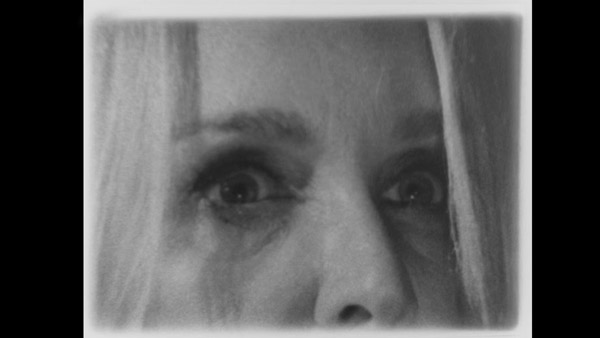
Still from Dan Lopez's they’re taking my house
Nigrin: Will you continue shooting in Super 8mm in the future?
Lopez: Absolutely! There is truly nothing quite like capturing your story on film. I am in love with the artistry of the entire process, from shooting scenes to developing your film by hand. I imagine being a lifelong student of the craft. I am in the midst of developing the script for my next foray into the medium, currently titled Where Has the Water Gone?
Boshell: I hope so. Kway has expressed interest in keeping this aesthetic for future videos, and I’ve had prospective collaborators watch this project and are now invested in the authentic look of Super 8mm. I think it has a very specific look and if I find myself with a project that needs that look, I will definitely be urging to shoot it for real and not throw on a few filters in post. At the very least this will be my gateway drug to further use of 16mm and 35mm in my future. I have my feature film directorial debut on the horizon, and this project has me thinking twice about shooting all digital.
Kofoed: Absolutely. While larger projects may require a return to digital from financial necessity, I have several shorts planned for the Super 8 format, including multi-reel films utilizing the textures of varied film stock. I also look forward to the additional challenge of working with 16mm film, having recently purchased a camera.
Porter: I think I will incorporate it into projects in the future. I would like to shoot another short with it at some point as well. But for now, no plans.
MacDonald: I will definitely be using Super 8 in the future - I'm currently making another documentary but this time using Black and White filmstock.
Chandler: I hope to always be able to shoot super 8 film! I'm so glad it still exists.
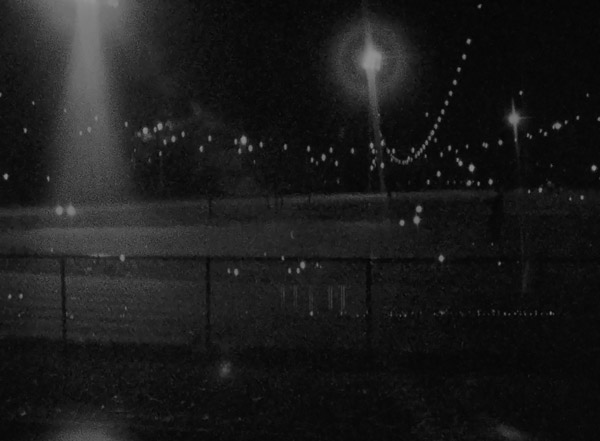
Still from A. Rosalie Chandler's Track
Nigrin: Are there any memorable stories while you made this film or any other info about your film you can rely to us?
Lopez: As I had mentioned, my grandmother was integral to the making of this film. Not a week after the film debuted at a showcase in Austin, I received a call from my mother that my grandmother’s health had taken turn for the worse. I booked my flight home to Philadelphia immediately. During that frantic journey home, I received constant updates on her condition until one of those calls carried the unfortunate news that she had passed. The timing of it all felt beyond coincidence. The film took on a different meaning. I owe my life to her strength, both in how integral she was in my upbringing and for escaping Cuba to provide her family with a better life. Though incredibly sad, I can’t help but feel happy that I was able to produce something in which her DNA is so thoroughly a part of. Though she was far from a cinephile, I know she’d be proud of the work - if not simply because I made it.
Boshell: You know, if shooting on Super 8mm for the first time has taught me anything, it’s this—the hiccups and imperfect nature of film, as well as the suspense of waiting for weeks to see if what you shot was any good—like with digital film or any other group project, all of those hang ups aren’t worth it if you don’t have a good team to truly bring it to life. We had a tiny crew on this one, but we were an oiled machine so naturally they killed it—Arsenii Morin my DP was inseparable from both cameras and the film rolls themselves, and a priceless colleague both in willingness to run around the city with cameras and to swing lighting above his head over and over to simulate streetlights in the “driving” sequence; and of course Kway himself, always full of inspiring ingenuity and creativity, and in full use of his free will between his amazing lyrics and dance moves. I met both of these amazing individuals by exploring independent artistic circles—Arsenii at Chicago Filmmaker Friday and Kway through a music video I directed for the band Constant Headache—so for those out there who are wary about finding others to work with, good work is very attainable if you put yourself out there.
Kofoed: Every film that is made is a minor miracle, and “Les Amateurs” fought against its birth more than most. The day before our shoot I discovered my beloved Yashica camera would not provide any power and scrambled for a replacement. A photographer friend lent me two cameras, one of which did not have a battery for the light meter, while the other would not advance the film reliably. I ended up pulling an untested K-Mart branded camera from storage and shooting on a prayer. The day of the shoot, an actor took ill and had to be replaced. My sound recorder failed and the replacement would not provide phantom power to the shotgun mic, forcing us to record everything with wireless lavs. Yet after a slight delay, this ended up being the easiest, fastest production any of us have worked on. We did not take the time to write a formal script, instead working the actors through the shot list and allowing them to create the dialog in rehearsal. We shot in three locations and were finished in under four hours. Post production required no editing, just timing the actors’ dialog from each take to the film image along with the score, which was composed and recorded sight unseen while the film was still in the lab. I ended up turning in the film a day early.
Porter: I bought a Canon Auto Zoom 1014 off eBay after playing around with a smaller Canon for a while. We did a test shoot with it and it worked fine. I got my actor, her husband as an AC and my friend as a DP. All of us were staying home for Thanksgiving so we shot it in my house over one day. However, when we did our shoot, only two rolls actually went through the camera and I got four blank ones back. I was pretty bummed about it but I was determined to make it happen. So I got my cast and crew together again after the new year and we shot it again. I was actually moving and so only had the location - my house - for one more week. We shot it after most of the things in my house had been moved out. It was pouring rain in LA as well and access to the basement is only from outside. And to top it off, we couldn't get the camera to work at all. All I had was my older Super8 laying around that didn't shoot 24fps, on 18fps. But with no other choice, we shot it that way. And it ended up working just fine. I adjusted the playback speed in post to be 24fps and it was fine. Everything else went pretty well and I'm happy with how it turned out!
MacDonald: I post-produced the documentary in Los Angeles and when I was back in California - having shot Super 8 pick-ups in the UK - I discovered that a roll containing only shots of trains hadn't come out, I assume the sprockets weren't taken up by the Super 8 camera's teeth. So I had to fly back to the UK and pick up a few shots of trains journeying from London to Southend-on-Sea. Fortunately the weather was better so it was a happy (but expensive) accident!
Chandler: Another factor in getting back into making films was finally learning Premiere. I was taught FinalCut in college and used a pirated student copy on my 2009 Macbook Pro for a decade. When that computer finally died I felt like I had to give up editing. For some reason, I told myself I couldn't learn Premiere. A few years ago I was given access to LinkedIn Learning and Premiere through my day job. I took the basics course on using Premiere and easily got up to speed. It was a really important lesson to myself to never discourage or doubt my ability to learn. I have so much footage to go back and play with that would have just languished if I hadn't taken this step forward.
The 2026 United States Super 8 Film + Digital Video Festival, which is part of the New Jersey Film Festival, will be taking place on Saturday, February 21 and Sunday, February 22, 2026. The three Festival film programs will be online for 24 Hours on their show dates starting at 12 midnight Eastern USA time and there will be two in-person screenings at 5PM or 7 PM in Voorhees Hall #105/Rutgers University, 71 Hamilton Street, New Brunswick, NJ. General Admission Ticket=$15 Per Program; In-Person Only Student Ticket=$10 Per Program. For more info and to buy tickets go here: https://newjerseyfilmfestivalspring2026.eventive.org/welcome