
Originally published in Jersey Jazz Magazine. Reprinted by permission of the New Jersey Jazz Society.
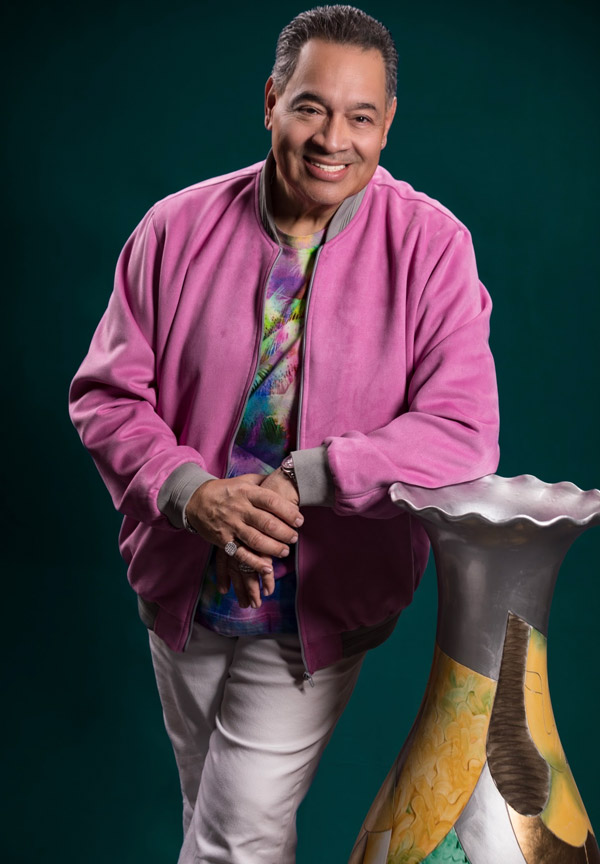
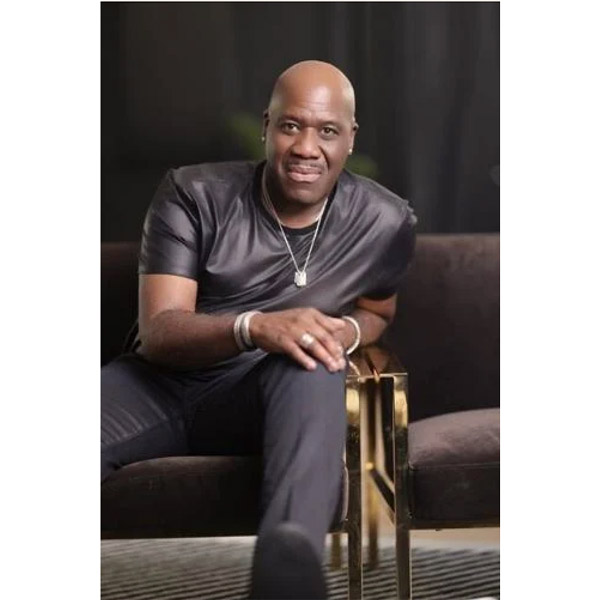
(RAHWAY, NJ) -- On Valentine's Day, while couples scramble for dinner reservations and last-minute roses, Will Downing has a better plan. He'll be taking the stage at the Union County Performing Arts Center in Rahway, NJ, offering an evening of songs built on romance, memories, and that unmistakable sultry baritone that has soundtracked jazz-infused R&B songs about relationships for more than three decades. For the men unsure how to impress on February 14, he keeps it simple. "You don't gotta say nothing," he laughed. "Just sit there, nod your head, act like you like the guy on stage. Your lady will be happy." It's classic Will Downing - charming, self-aware, and conversational.
Ask him about his “current tour” and he grins. “This tour? It’s the ongoing tour. Been going on about 37 years now, and it doesn’t stop.” After nearly three decades on the road, touring is less a chapter and more a lifestyle. “I still love music,” he said. “Fans who show up know exactly what they’re getting: a career-spanning set packed with the songs radio embraced, the tracks audiences grew up on. As you get older," Downing admitted, "the wear and tear is real. You feel it.” But the moment he hits the stage, something changes. The aches fade, the adrenaline kicks in, and suddenly the years don’t matter. “You start doing the music, the audience is with you, and all that stuff just falls by the wayside.”
Among the tunes he sings on tour include tracks from his 2025 Sophisticated Soul EP titled Still in Love, continuing a creative approach that fits today’s fast-moving music culture. “People want new music constantly now,” he explained. Instead of traditional full-length albums, he prefers shorter projects. “Instead of getting my feelings hurt seven or eight times, I cut it down to four or five songs,” he joked. The EP leans heavily into relationship themes—songs about commitment, compromise, and holding things together. “That’s always been my lane,” he said.
One of his most personal records, Moods (Motown Records: 1995), came during a divorce and focused on a relationship unraveling. A standout track, “Sorry I,” gets a strong reaction live. “Women give me the side-eye,” he laughs, “and guys are like, ‘Yeah… that was me.’” That shared recognition is what keeps his music relevant.
Downing grew up in Brooklyn, the youngest of four children in a household with no musical pedigree. “My parents weren’t musicians. My siblings weren’t either,” he laughed. “Sometimes I think I might’ve been adopted.” Music wasn’t a career plan. It was just part of daily life. The house was always filled with sound, from his parents’ records to whatever his brothers and sisters dragged home. Cleaning, cooking, hanging out—everything happened with a soundtrack. As the youngest, he soaked it all in, and that constant variety quietly shaped his ear.
School gave him his first real push. Like a lot of kids back then, he sang in choir and messed around with basic instruments. That’s when a teacher named Mr. Hassel noticed something different. He’d stop class, listen closely, then pull young Will aside. When Downing was 12, Hassel nominated him for the Brooklyn Borough-Wide Chorus—a serious Saturday commitment he immediately rejected. His parents volunteered him anyway. He ended up loving it. That same teacher later pushed him toward Erasmus Hall, a performing arts high school where actors, dancers, and musicians trained seriously. It was a Fame-style environment—raw talent everywhere, ambition in the air. He took the leap and thrived.
After drifting around Brooklyn after high school, he ran into Mr. Hassel, the same teacher who’d started it all. Hassel looked at him and said, “You’re talented. What about college?” “Not really,” he answered. Hassel told him about a college music program at Virginia Union University. “Just go for a year,” he said. “See what happens.” So, he did. And he loved it. Then, he came home, transfered to Brooklyn College, and jumped into the music industry headfirst -- this time all in.
His first big break came as a background vocalist. Jennifer Holliday called him for a session, but first he had to audition over the phone. “Can you hit this note?” He begged for the chance. After working his day job one evening, still in a shirt and tie, he walked into the studio where seasoned pros sized him up like, “Who’s this cornball?” But once they sang, he blended right in. His name started getting passed around, and soon he was everywhere.
Over the years, his voice appeared on tracks by Billy Ocean, Mariah Carey, Billy Joel, Vanilla Ice, The O’Jays, Kool & The Gang, Najee, and Misha Paris, among others. From 1982 until he went solo in 1988, he was primarily a background singer, often on major hits.
Before his solo breakthrough, Downing released several singles under fake names—club records meant to test the waters. One of them, an answer song to Gwen Guthrie’s “Ain’t Nothin’ Goin’ On But the Rent” called “Ain’t Gonna Pay You One Red Cent,” caught attention overseas. That led to his first solo album. It flopped in the U.S., selling maybe 50,000 copies, but went platinum in Europe.
Jazz standards are a love-hate relationship. “I hate them,” he joked, “Because I love them so much.” He occasionally records them, collaborating with artists like Gerald Albright and reimagining classics from Coltrane and Hartman. But he knows it’s not where his audience lives. “You can’t make a living off standards,” he admits, “but I love them to my core.”
Downing's domestic breakthrough came with his third album, A Dream Fulfilled. (Island Records:1991) While it performed well in the United States, it didn’t make much impact overseas, which reversed his touring pattern. Suddenly, he was focusing on domestic shows again, almost like starting over. “People were like, ‘Who’s this new guy?’” he laughs. “I’m like, ‘New guy? This is my third record!’” From that point on, his albums consistently appeared in the upper ranks of the R&B charts. He reached new commercial heights with After Tonight (Peak Records: 2007), which topped the R&B charts and reached Number 37 on the overall US Billboard charts, followed by Classique(Concord Music Group: 2009), which hit Number 3 on the R&B charts and Number 22 on US Billboard charts.
A pivotal moment came when he moved to Motown for All the Man You Need (1991). The label president, Kedar Massenberg, a high school friend, stepped in to protect him when Motown planned to cut several R&B artists. “We’re keeping this guy,” Massenberg insisted. That album earned him a Grammy nomination, marking a high point in critical recognition. “Suddenly everybody loved me again,” he joked.
In the late ’90s, Downing found another creative outlet: photography. After clashing with a photographer over an album cover concept, he bought a cheap Canon camera and a mountain of film. “I was terrible,” he admits. Humbled, he apologized and took lessons. Soon he was shooting backstage at shows -- Patti LaBelle, Gladys Knight, The O’Jays, eventually photographing them at home. Now he hosts exhibits, is working on his second photo book, and shoots weekly.
Downing also became known for his streamed radio show, The Wind Down, which recently ended. “I had been doing it since 2008," he explained. The idea sprang from a difficult period in my life: I got really sick -- like, really, really sick. And I didn’t want the public to know that I was basically incapacitated at the time. So, to keep my voice alive and keep my presence alive in people’s minds, I started doing the radio show. They couldn’t see me, but they could still hear me.” Over the years, the show evolved into a platform for underexposed artists, giving them a wider audience and introducing listeners to music they might not otherwise hear.
Valentine’s Day at Union County Performing Arts Center in Rahway is just another stop on a tour that never really ends. But for Will Downing, it’s exactly where he wants to be -- singing about love, sharing stories, and reminding people why they fell in love with his rich baritone voice in the first place.
The Union County Performing Arts Center Main Stage is located at 1601 Irving St. in Rahway, NJ. The Will Downing performance begins at 8:00pm on February 14. Tickets are available online exclusively at smoothjazznj.com. Tickets are not for sale at UCPAC’s Box Office for this event. or call (732) 499-8226.
The New Jersey Jazz Society is a non-profit organization of business and professional people, musicians, teachers, students and listeners working together for the purpose of advancing jazz music. Their mission is to promote and preserve America’s original art form – jazz. The Society seeks to ensure continuity of the jazz art form through its commitment to nurture and champion local talent, along with showcasing outstanding national and international artists providing for the younger generation via arts education programs.