
originally published: 01/03/2019
Mike Davis traces his love for the trumpet back to a Disney movie.
He grew up in a musical family, with both his parents playing strings in the Seattle Symphony. But Davis wanted an instrument of his own.
Then, at age 9, he saw “The Aristocats,” the animated film about a bunch of French felines — including a group of jazz-playing alley cats.
“There’s a black cat who wears a bowtie and a derby hat who plays trumpet,” Davis recalls. “He’s clearly supposed to be Louis Armstrong. And I had just seen that, so I thought: That looks like fun.”
Nearly two decades later, Davis is a 26-year-old who makes his fun — and his living — as a top trumpeter in New York City, playing jazz in a variety of bands and jam sessions.
But despite his age, Davis prefers music that’s more 1929 than 2019.
He fronts a seven-piece band, The New Wonders, that treads in traditional jazz from nearly a century ago. The kind Armstrong helped make famous during the Roaring Twenties and then the Great Depression, when brass instruments and crooning singers were common in speakeasies and on 78 rpm records. Or, if you’re a film snob, the kind that often plays over the credits of a Woody Allen movie.
The New Wonders even dress the part, decked in dapper suits reminiscent of Jimmy Cagney. Davis sports a pencil mustache, to boot.
You can see the anachronistic splendor at two upcoming dates in New Jersey. Davis and his band will appear Saturday, Jan. 6 at Haddonfield United Methodist Church, and the following Saturday, Jan. 12, at Centenary Stage Company’s January Thaw Music Festival, held at The Sitnik Theatre of the Lackland Performing Arts Center in Hackettstown.
Davis says you’ll even hear some old-time four-part harmony mixed in.
To Davis, the jazz of the 1920s and ’30s simply has more variety and surprise than ’40s swing (“everybody’s swing band sounds the same,” he says) or hip bebop with long solos (“I’m just bored by the lack of texture,” he explains).
Plus, Davis says, there’s vivid songwriting and the sound of real instruments — nothing processed with reverb through a giant sound system.
“Just hearing real analog instruments that don’t plug into anything, played by sensational musicians,” he says. “It’s like: They’re all good enough already. They were good enough 100 years ago. They already sound great together indoors.”
“People used to play instruments and sing together at home for fun,” Davis adds with a laugh. “That was fun in the 1920s — to get Little Johnny on piano and Susie on the cornet or whatever. We’ve sort of lost that — making music for our own enjoyment at an indoor volume. Not everything has to be giant stadiums.”
So how in the world did a kid born in the birthplace of grunge at the height of Nirvana’s popularity get here?
Davis initially thought about following his parents into classical music. But that, he explains, brought too much pressure.
“It might be nice to have a contract and a salary and health insurance and that kind of thing,” Davis says. “But you also have to sit next to the same person for 40 years. And I get to play in different bands every night.”
After that viewing of “The Aristocats” led him to fall for the trumpet, Davis began studying the instrument locally. But the Big Apple beckoned.
“I was just determined to move to New York,” Davis recalls. “I visited and was like, ‘I have to live here.’”
He became a jazz major at the Manhattan School of Music, a private conservatory. But his professors pushed what he calls a “a very contemporary flavor of jazz as what we all needed to do.”
Then, about halfway through his studies, Davis saw a band from Philadelphia, Drew Nugent & The Midnight Society, that played 1920s jazz.
“No gimmicks and no extra stuff and the right instruments,” Davis remembers. “And that was an epiphany for me.”
His professors tried to stop him.
“They’re all pretty much retired now at this point, so it’s not a reflection on the Manhattan School of Music today,” Davis says. “But they were pretty active about it. ‘You can’t make a living doing that. No one wants to hear that old stuff. It’s old and irrelevant. And why are you into this anyway?’”
Soon, Davis discovered he wasn’t alone. There’s a thriving traditional jazz scene in New York, with jam sessions — like a famed one at Mona’s — where people meet and network. Bands frequently shuffle members and musicians sit in on two or three gigs a day.
“Everybody has everybody’s number,” Davis says, noting he’s worked with 15 bands over the last month alone.
The New Wonders play only a few shows a month. But this is where Davis is in charge — even if that doesn’t come naturally.
“I’m the leader because there’s music I want to play that I wouldn’t get to play otherwise,” he explains. “So I’d say fairly little of my time is the New Wonders because I want to keep it my fun, artistic project where I get to express myself somewhere.”
The band’s name comes from the cornet model that Davis’ hero, 1920s jazz musician Bix Beiderbecke, played: the Conn New Wonder model cornet. Davis has one of his own, from 1917.
“They made so many, and they’re not popular for today’s music styles, so they’re all over eBay,” he says. “My mom, the violinist, is angry-slash-finds it hilarious that I make my living on these horns that I buy for $300 on eBay.”
“I think old photos of Louis Armstrong are so cool,” Davis explains. “Band shots from that era — that’s the way I want to look. I like to watch old movies and stuff, too.”As for the band’s vintage attire? Davis says he used to shop at H&M and tried to fit in with the more modern jazz players at school. But the suits and slick-backed hair, he says, “went hand in hand with admitting that I want to sound this way.”
It’s a challenge, though. Davis has some vintage clothing, but it’s fragile and musty. He wears that only for specific shows. The rest of the time, he gets his suits specially made.
“Because you can’t walk into a store and buy those styles today,” Davis says.
Yes, he meets a lot of people who can’t believe someone his age looks and plays like this.
“But musicians I work with who are 50 and 60 say that when they were my age, they were already getting that,” Davis says.
Plus, he has a goal: to encourage musicians who are younger than him who show up to jam sessions.
“It really feels like a community of people who are into this stuff,” Davis says. “So I want to be a positive presence there. Before I know it, I’m going to be the one who’s 50.”
Davis says he doesn’t ever see himself playing a different style of music. He doesn’t think he’s suited for it.
“I get calls for stuff, and I recommend somebody that’s a better fit usually,” he says. “It could be fun. But I don’t have any plans to try to branch out.”
“Once in a while,” Davis adds, “a gig will go a little more modern than I was expecting, and I can play later styles of jazz. I’m just not really excited about it.”


Sunday, November 22, 2026 @ 3:00pm
Algonquin Arts Theatre
60 Abe Voorhees Drive, Manasquan, NJ
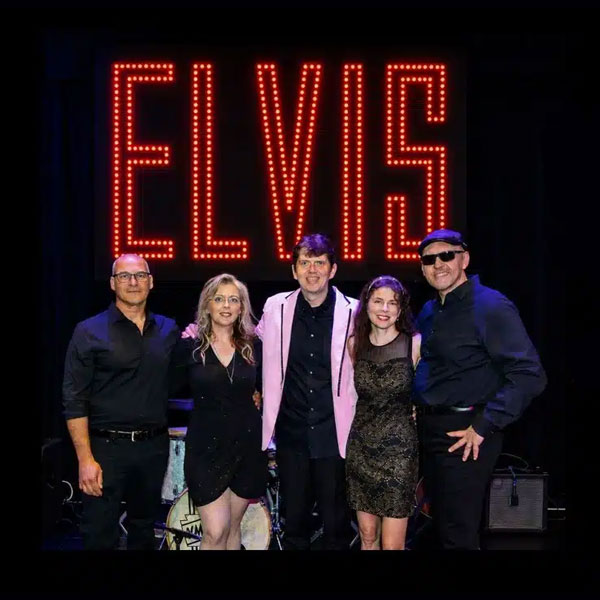
Celebrate the holidays with the electrifying sounds of Elvis Presley, starring Travis LeDoyt - widely regarded as the "world's best young Elvis." Backed by a live band, this festive concert features Elvis's most beloved Christmas classics alongside his greatest hits, delivered with the authentic voice, look, and charisma of the King's early rock 'n' roll era.

Sunday, November 22, 2026 @ 7:00pm
Mayo Performing Arts Center (MPAC)
100 South Street, Morristown, NJ
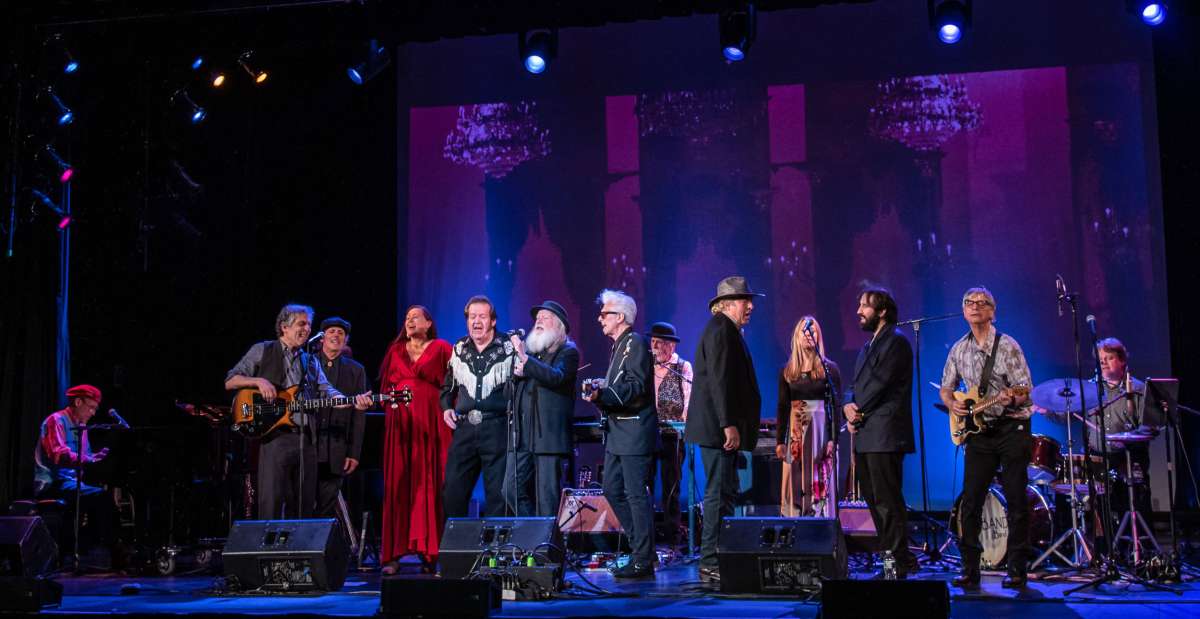
Opening Act: Oakland Rain

Sunday, November 22, 2026 @ 3:00pm
Kean Stage - Enlow Recital Hall
215 North Avenue, Hillside, NJ
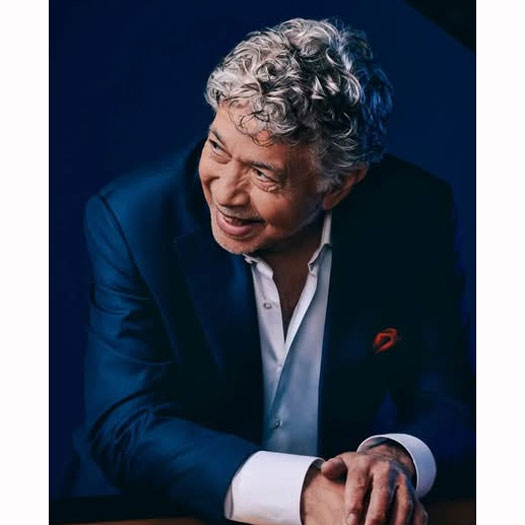
At the intersection of Jazz and Jamaican music in the 50s and 60s stood two luminary figures… guitarist Ernest Ranglin and pianist Monty Alexander. Their historic recordings over many decades literally introduced the world to what we now know as the Jamaican Ska movement… which traveled throughout the Caribbean and the rest of the world. The ingenious interweaving of jazz’s complexities with the ancestral music of the Caribbean immediately influenced legends such as Bob Marley, Toots & the Maytals, and many other artists of the time.

Friday, November 27, 2026 @ 8:00pm
NJPAC - Prudential Hall
1 Center Street, Newark, NJ
The RoadBlock Radio Concert Series brings an evening of reggae and dancehall to NJPAC this November, featuring Jamaican reggae icons Capleton, “The Fireman,” and Tarrus Riley, “Mr. Singy Singy.” Known for his commanding vocals and fiery dancehall sound, Capleton has been a defining voice in reggae for decades, with music rooted in Rastafarian spirituality and social consciousness. Tarrus Riley brings his soulful vocals and signature roots-reggae sound, best known for the beloved “She’s Royal.” Together, these two Jamaican artists promise a night of powerful rhythms, rich melodies and reggae music in the heart of downtown Newark.

Saturday, November 28, 2026 @ 7:30pm
Lizzie Rose Music Room
217 E. Main Street, Tuckerton, NJ
The Bell Bottom Blues was formed in 2007 with the vision of providing an audience with a true Eric Clapton Experience. Through its evolution, the band has been carefully constructed to create the essence of the Clapton sound, from his guitar arrangements to his distinctive vocal sound. This is what separates The Bell Bottom Blues from all others and makes us unique in the market. We have been told time and time again by our audiences and fans that “they close their eyes during a show and could swear that they were actually at a Clapton concert”. This is what we actually set out to achieve.