
Here is my interview with Clan of the Painted Lady Director Jennifer Chiu who is a Hakka-Canadian filmmaker who contends with the loss of her ancestral community in Kolkata, India. She journeys across the world to uncover the story of her family’s past and confronts the effects of migration on family, belonging and the uncertainty of preserving culture in the modern world.
Nigrin: Tell us about the origins of your film Clan of the Painted Lady and why you decided to make it.
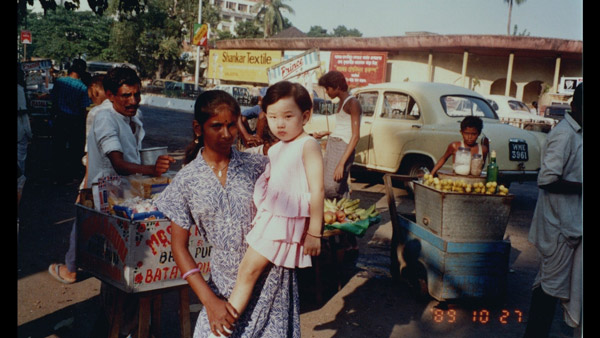
Chiu: In my mid-20s I started to really wonder about my family history. I wanted to understand how my ancestors on both sides of my family ended up in India. I had never visited China and I wondered where we came from. In the film you can see images and video footage of the first trip I took to China in 2009. I interviewed some relatives when I was there and received some answers, but many were still left unanswered. It took me another decade to finally act on this long standing curiosity. The spark that lit my fire was when I went to visit my father and mother in India in 2019. I hadn't been back to India for a decade and I was shocked and saddened to see how much of the community had left, and how many of the old tannery buildings were torn down and replaced with high rises. Everyone I talked to had accepted the inevitability of the end of our community here. The fragility of it all really struck me, and that's when I began the process of developing the story for the film.
Nigrin: Your film begins as an autobiographical documentary, but the scope widens as we move through the film. Was that always the intent?
Chiu: It was the only way I could tell the story because during the first three years of developing the film, none of my family members wanted to be in it! This was very difficult for me emotionally, especially because my parents weren't interested in participating in a project that was largely my attempt at trying to understand them in a deeper way. But for some inexplicable reason, I carried on working on the film and at the last minute, literally a few weeks before we were going to shoot in India, they both changed their minds. They still refused to be interviewed, but they allowed me to film them.
Since I knew from the beginning I couldn't rely on my family's appearance or their stories, I really had no choice but to broaden my scope. I'm so glad I did because it made the project more meaningful for me. Getting to explore other families and other perspectives on culture and its preservation and evolution was much more intriguing and I think made the film much more interesting for me in the end. I believe everything happens for a reason, even when they are hard things.
Nigrin: Clan of the Painted Lady has an amazing array of archival footage. Was it difficult to track all of these images down? Where did they come from?
Chiu: All the archival elements in this film have an interesting back story. The Super 8mm archival footage of Tangra from the 1980s comes from the field work of an American anthropologist named Ellen Oxfeld who stumbled upon our community in the 80s and became so fascinated with the Hakka of Tangra that she spent two decades of her life studying us. She published a book about our community called Blood, Sweat and Mahjong.
When I started researching, people would tell me about this American who came to Tangra to study us, but no one could ever remember her name! I finally found out who she was and interviewed her and she mentioned that she had this film footage of our community but that unfortunately she did not know where the film reels were and that they were not in her possession. We were in contact for two years before we went to camera and I had lost hope that we would ever see it. But right before we left for India, Ellen sent us an email saying she had miraculously located the footage and it was in good condition. It was filmed by Purnendu Bose, a talented cinematographer who worked with Satyajit Ray in the 1970s. He lived in Kolkata at the time and it makes sense as to why the footage is so beautiful. The footage of my family that appears in the film did not materialize until very late in the edit. Without it, I don't think I would have had a film. I'll let your readers watch the film to see what I mean and the story behind it.
Historical images of Hakka people in China (or elsewhere) are extremely hard to find since most don't usually name the specific peoples or cultural groups in the photographs. However, there was one particular collection of photos we found from a missionary group from Switzerland called the Basel Mission who worked in Hakka villages in China in the 19th and early 20th centuries to try and convert Hakka people to Christianity. The Taiping Rebellion, a civil war which killed nearly 30 million people (some estimate 5-10% of the population of China at the time) was started by a Hakka man who claimed to be the brother of Jesus Christ. This history is not in the film but the source of these archival images hints at the complex history of China and Hakka people's place within it.
The history of China in the 19th century is a rabbit hole I recommend everyone go down. One of the greatest gifts of this project for me, was getting to learn about this history. It has become a wellspring of understanding and inspiration for future projects.
Nigrin: Using the Painted Lady Butterfly as a metaphor is brilliant. How did you come up with this idea?
Chiu: I was studying butterflies and became fascinated by their mysterious migration patterns. When I learned about the Painted Lady butterfly and their multi-generational journey across the world, I felt this deep connection to this small, delicate creature. It reminded me of my own family story, and the Hakka story at large. I felt we shared something that we could never really speak of, guided by some kind of spiritual or ancestral compass which we do not understand. I knew this parallel between us was meant to be the creative framework for my story. I thank the butterflies for their inspiration!
Clan of the Painted Lady screens at the New Jersey Film Festival on Saturday, September 5, 2026 – – Online for 24 Hours on this date! Get more info and buy tickets here.
The 45th Bi-annual New Jersey Film Festival will be taking place between September 4-October 4, 2026. The Festival will be a hybrid as we will be presenting it online as well as doing select in-person screenings at Rutgers University. All the films will be available virtually via Video on Demand for 24 hours on their show date. VOD start times are at 12 Midnight Eastern USA. Each General Admission Ticket or Festival Pass purchased is good for both the virtual and the in-person shows when both are offered. We will also be offering an Audio-Visual Concert featuring Hanging Coats and Lawns as well as two FREE Filmmaking Workshops! The in-person screenings, the filmmaking workshops and the AV Concert will be held in Voorhees Hall #105/Rutgers University, 71 Hamilton Street, New Brunswick, NJ beginning at 1PM, 5PM or 7PM on their show date. General Admission Ticket=$15 Per Program; Festival All Access Pass=$100; In-Person Only Student Ticket=$10 Per Program. The Filmmaking Workshops are FREE and open to the public but have limited seating and require advance registration. To register email us at [email protected]
For more info on the Film Festival go here: https://newjerseyfilmfestivalfall2026.eventive.org/welcome


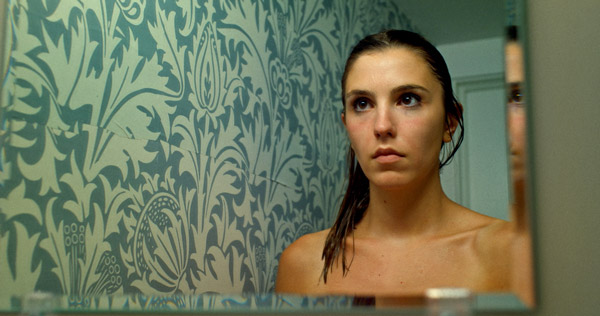
A young woman is hired by a finance couple to tutor their son at their summer lake house, and finds herself increasingly enmeshed in the undisclosed darkness of their past.

The 45th Bi-Annual New Jersey Film Festival will be taking place between September 4-October 4, 2026. The Festival will be a hybrid as we will be presenting it online as well as doing select in-person screenings at Rutgers University. Almost all the films will be available virtually via Video on Demand for 24 hours on their show date. VOD start times are at 12 Midnight Eastern USA. Each General Admission Ticket or Festival Pass purchased is good for both the virtual and the in-person shows when both are offered. This program is only available Online for 24 hours on this show date!

The 45th Bi-Annual New Jersey Film Festival will be taking place between September 4-October 4, 2026. The Festival will be a hybrid as we will be presenting it online as well as doing select in-person screenings at Rutgers University. Almost all the films will be available virtually via Video on Demand for 24 hours on their show date. VOD start times are at 12 Midnight Eastern USA. Each General Admission Ticket or Festival Pass purchased is good for both the virtual and the in-person shows when both are offered. This program is available Online for 24 Hours and In-Person at 5PM. This in-person screenings will be held in Voorhees Hall #105/Rutgers University, 71 Hamilton Street, New Brunswick, NJ.

The 45th Bi-Annual New Jersey Film Festival will be taking place between September 4-October 4, 2026. The Festival will be a hybrid as we will be presenting it online as well as doing select in-person screenings at Rutgers University. Almost all the films will be available virtually via Video on Demand for 24 hours on their show date. VOD start times are at 12 Midnight Eastern USA. Each General Admission Ticket or Festival Pass purchased is good for both the virtual and the in-person shows when both are offered. This program is only available Online for 24 hours on this show date!

The 45th Bi-Annual New Jersey Film Festival will be taking place between September 4-October 4, 2026. The Festival will be a hybrid as we will be presenting it online as well as doing select in-person screenings at Rutgers University. Almost all the films will be available virtually via Video on Demand for 24 hours on their show date. VOD start times are at 12 Midnight Eastern USA. Each General Admission Ticket or Festival Pass purchased is good for both the virtual and the in-person shows when both are offered. This program is available Online for 24 Hours and In-Person at 7PM. This in-person screenings will be held in Voorhees Hall #105/Rutgers University, 71 Hamilton Street, New Brunswick, NJ.