
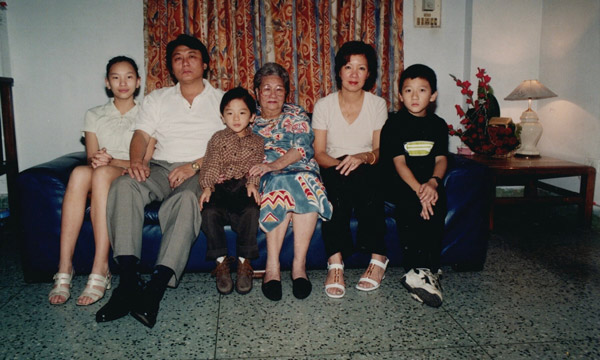
Migration is often discussed in terms of the places people leave and the places they eventually call home, but Clan of the Painted Lady, directed by Jennifer Chiu, is more interested in everything that happens in between. The documentary follows Chiu as she reconnects with her Hakka identity and traces her family history stretching across China, India, and Canada. Born in India and raised in Canada, Chiu grew up mostly separated from her father, who spent much of his life in Kolkata, India. What begins as a personal search into her own family eventually becomes a larger exploration of migration, cultural loss, and what it takes to keep a culture alive across generations.
One of the strongest parts of Clan of the Painted Lady is how cinematic the entire film feels. Whether Chiu is filming in China, India, or Canada, there is something very graceful and intentional about the way she captures each place. Even the most mundane moments are brought to life through her camera. Streets, buildings, meals, family homes, and people simply going about their day are given time and attention. Paired with peaceful music, these images feel intimate and nostalgic while still remaining grounded in reality. This becomes especially meaningful when filming places like Tangra, where Kolkata’s Hakka-Chinese community is rapidly changing. Chiu is not only capturing beautiful images but also preserving spaces and ways of life that may not always exist in the same form.
The archival footage also blends beautifully into the film, with older images flowing naturally into present-day scenes. Chiu weaves the Painted Lady butterfly throughout the documentary, showing its transformation from caterpillar to butterfly. Its migration is so long that it takes multiple generations to complete, meaning no single butterfly experiences the entire journey. This becomes a beautiful parallel to the Hakka diaspora, where each generation also experiences only one part of a much longer history of migration.
While the film is beautifully put together, the people in it are incredibly raw and honest. The interviews rarely feel formal, making the documentary feel much more personal. Some people speak directly to the camera, while other conversations happen naturally between family members. Moments of laughter, disagreement, and blunt honesty also bring brilliant humor to the film. Chiu’s father is especially memorable. He was largely absent from her childhood but is now part of her life as an adult, and the film does not make their relationship more sentimental than it is. His honesty can be unexpected, but also funny and endearing. Chiu lets these moments unfold naturally, making their relationship feel genuine.
That honesty also comes through with younger generations and their relationship with Hakka culture. Some admit they are not very interested in learning more about their heritage, while others want to leave Hakka communities to pursue other opportunities. I appreciated that the film does not treat these perspectives as wrong. Chiu gives them the same space as those deeply invested in preserving Hakka culture. This makes the documentary more honest about how culture changes across generations and how younger people can have very different relationships with their heritage.
Clan of the Painted Lady works because it does not give a simple answer about what should be preserved or left behind. Chiu clearly cares about the parts of Hakka culture being lost, but also understands that culture changes as people move and build lives elsewhere. Beautifully filmed, intimate, funny, and honest, the documentary shows how complicated it can be to stay connected to a culture across generations. It leaves the audience thinking about what gets carried forward, what gets left behind, and how much can change from one generation to the next.
Clan of the Painted Lady screens at the New Jersey Film Festival on Saturday, September 5, 2026 – Online for 24 Hours on this date! Get more info and buy tickets here.
The 45th Bi-annual New Jersey Film Festival will be taking place between September 4-October 4, 2026. The Festival will be a hybrid as we will be presenting it online as well as doing select in-person screenings at Rutgers University. All the films will be available virtually via Video on Demand for 24 hours on their show date. VOD start times are at 12 Midnight Eastern USA. Each General Admission Ticket or Festival Pass purchased is good for both the virtual and the in-person shows when both are offered. We will also be offering an Audio-Visual Concert featuring Hanging Coats and Lawns as well as two FREE Filmmaking Workshops! The in-person screenings, the filmmaking workshops and the AV Concert will be held in Voorhees Hall #105/Rutgers University, 71 Hamilton Street, New Brunswick, NJ beginning at 1PM, 5PM or 7PM on their show date. General Admission Ticket=$15 Per Program; Festival All Access Pass=$100; In-Person Only Student Ticket=$10 Per Program. The Filmmaking Workshops are FREE and open to the public but have limited seating and require advance registration. To register email us at [email protected]
For more info on the Film festival go here: https://newjerseyfilmfestivalfall2026.eventive.org/welcome


Direct from an acclaimed run at Edinburgh Fringe and two sold-out Off-Broadway engagements comes Laura Benanti: Nobody Cares, a one-woman comedy show from the mind of Tony Award® winner Laura Benanti. Known for her dazzling Broadway performances and razor-sharp wit, Benanti takes the stage to share her hilarious, heartfelt, and sometimes brutally honest takes on motherhood, people pleasing and the joys of aging. Blending side-splitting storytelling with original songs, New York Times Critic's Pick Nobody Cares is a love letter to recovering people pleasers, mothers, and anybody working on themselves.

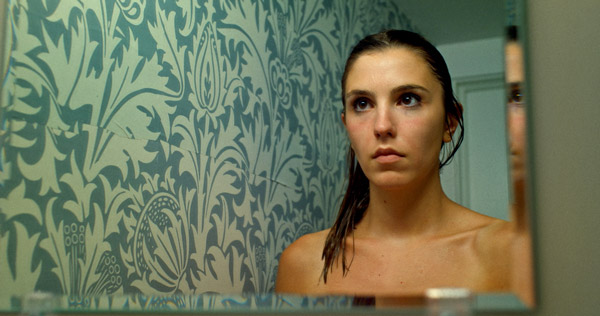
A young woman is hired by a finance couple to tutor their son at their summer lake house, and finds herself increasingly enmeshed in the undisclosed darkness of their past.

The 45th Bi-Annual New Jersey Film Festival will be taking place between September 4-October 4, 2026. The Festival will be a hybrid as we will be presenting it online as well as doing select in-person screenings at Rutgers University. Almost all the films will be available virtually via Video on Demand for 24 hours on their show date. VOD start times are at 12 Midnight Eastern USA. Each General Admission Ticket or Festival Pass purchased is good for both the virtual and the in-person shows when both are offered. This program is only available Online for 24 hours on this show date!

The 45th Bi-Annual New Jersey Film Festival will be taking place between September 4-October 4, 2026. The Festival will be a hybrid as we will be presenting it online as well as doing select in-person screenings at Rutgers University. Almost all the films will be available virtually via Video on Demand for 24 hours on their show date. VOD start times are at 12 Midnight Eastern USA. Each General Admission Ticket or Festival Pass purchased is good for both the virtual and the in-person shows when both are offered. This program is available Online for 24 Hours and In-Person at 5PM. This in-person screenings will be held in Voorhees Hall #105/Rutgers University, 71 Hamilton Street, New Brunswick, NJ.

The 45th Bi-Annual New Jersey Film Festival will be taking place between September 4-October 4, 2026. The Festival will be a hybrid as we will be presenting it online as well as doing select in-person screenings at Rutgers University. Almost all the films will be available virtually via Video on Demand for 24 hours on their show date. VOD start times are at 12 Midnight Eastern USA. Each General Admission Ticket or Festival Pass purchased is good for both the virtual and the in-person shows when both are offered. This program is only available Online for 24 hours on this show date!