

Before the Factory Gates Open...
A Mother, a Daughter, and a Community of Dreamers Bring Roald Dahl’s Beloved Story to Life
“A little nonsense now and then is relished by the wisest men.” — Roald Dahl
(MATAWAN, NJ) -- Most people think magic announces itself with fireworks. Roald Dahl knew it usually begins much more quietly. Sometimes it begins with a chocolate bar. Sometimes with a child who refuses to stop believing. And sometimes, it begins in the basement of a church.
This August, Spotlight Players invites audiences into Roald Dahl’s Charlie and the Chocolate Factory, the beloved Broadway musical based on one of the world’s most enduring stories. Filled with unforgettable songs, inventive stagecraft, colorful characters, and all the delightful eccentricity audiences have come to expect from Willy Wonka’s extraordinary world, the production promises laughter, heart, and a reminder that kindness never goes out of style.
But the story audiences will see on stage is only half the story.
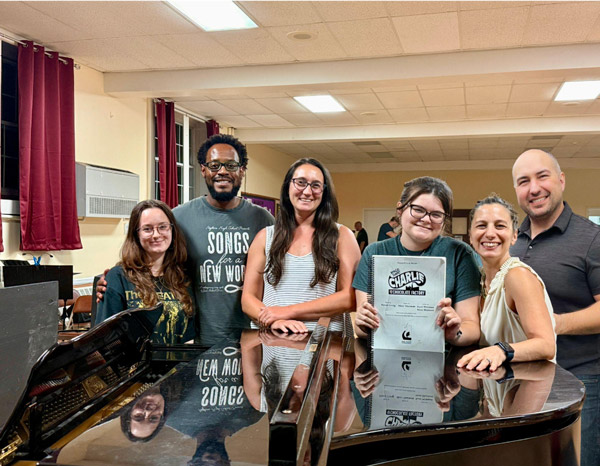
Long before Charlie unwraps his Golden Ticket, before the chocolate river begins to flow, and before the Oompa Loompas deliver their wonderfully pointed observations, another story has already begun behind the scenes. It’s the story of artists, volunteers, families, and dreamers who gather night after night to create something none of them could create alone.
This is that story.
The Story Behind the Story
Before anyone steps inside Wonka’s factory, someone has to imagine it.
For Roald Dahl’s Charlie and the Chocolate Factory, that responsibility belongs to co- directors Christine deSimas and Sophia deSimas, a mother and daughter whose creative partnership has grown out of years of conversations about theatre.
Long after most audiences have gone home, the two are usually still talking about the show they’ve just seen. They replay scenes during the drive home, debate character choices over coffee, imagine different ways to stage a moment, and challenge one another’s ideas. Somewhere along the way, those conversations stopped being hypothetical. Their first collaboration as co-directors, The Guy Who Didn’t Like Musicals, confirmed something they had quietly suspected all along.
They simply work better together.
For Christine, sharing the director’s chair with her daughter has become one of the greatest joys of her theatrical life.
“I’m just the luckiest. Sophia is so creative and has such a good eye that I can’t imagine doing this without her. We bounce ideas off each other constantly, and when something finally clicks, we both know it. We can be honest with each other because we’re always working toward the same goal.”
Sophia is just as quick to return the compliment.
“I learned from the best before I realized I did. Growing up with a director gives you an eye for storytelling before you even know you’re learning it. Every rehearsal leaves me grateful that I get to do this with my mom.”
Their perspectives are different, but their vision is shared. Christine naturally gravitates toward the emotional heartbeat of a story, while Sophia brings a fresh perspective and an instinct for visual storytelling. Together, they’ve built something every creative team hopes to find: a partnership where ideas are challenged, trust is never questioned, and the work is always stronger because it’s created together.
Why Charlie? Why Now?
Choosing a musical isn’t as simple as flipping through a licensing catalog and picking a favorite title. For Christine and Sophia, the process begins with questions rather than songs. Will this story still resonate today? Does it offer something meaningful to the people creating it? Will audiences leave talking about more than the scenery and the score?
Sometimes that search takes weeks. Sometimes it takes months. Scripts pile up on the table, productions are streamed late into the evening, and ideas are enthusiastically debated. More than once, Christine admits with a laugh, they’ve fallen in love with a show before realizing the performance rights weren’t even available.
When Roald Dahl’s Charlie and the Chocolate Factory entered the conversation, however, the decision came surprisingly quickly.
For Christine, the musical offered an opportunity to bring generations together, both onstage and in the audience. With roles for children and adults alike, it reflected the kind of community theatre she loves most: one where families create together and audiences of every age can share the same sense of wonder.
Sophia saw something else beneath the chocolate waterfalls, candy inventions, and larger-than-life characters.
She saw a story that has never stopped speaking to the world around us. Greed.
Ego.
Overconsumption.
The temptation to lose sight of what truly matters.
Charlie has always been about far more than candy. Each child who enters Wonka’s factory represents a different flaw, while Charlie Bucket quietly reminds us that kindness, humility, curiosity, and gratitude are qualities worth celebrating. Nearly sixty years after Roald Dahl first introduced readers to Charlie, those ideas remain just as relevant today.
Perhaps that’s why the story has endured through generations of readers, multiple film adaptations, and now a new generation discovering it through live theatre.
The chocolate is simply how Roald Dahl gets us through the front door.
The heart is what stays with us long after we leave.
Building Wonka’s World
When audiences arrive on opening night, they’ll see the finished product. The orchestra will begin, the lights will rise, and Wonka’s factory will spring to life as though it has always existed.
What they won’t see are the hundreds of decisions that made those moments possible. The conversations over sketches spread across a rehearsal table. Costume fittings that run a little longer because someone has found the perfect detail. Set pieces rebuilt after a better idea emerges. Music rehearsed again. Lighting cues adjusted one more time. Community theatre is built in moments like these, one conversation, one problem solved, and one act of generosity at a time.
Christine is the first to point out that Roald Dahl’s Charlie and the Chocolate Factory isn’t the vision of one director. It’s the result of an entire creative team choosing to build something together.
“The production team is very unique and special, and it’s difficult imagining doing this without them,” she says. “Charlie is definitely a sum of its parts. From the talented eye to the genuine love and care that goes into every choreographed movement, sketch, build, lighting cue, sound cue, marketing piece, stage management note, costume, and our producer who’s always on top of it all... every single person is invested in making this show the very best it can be.”
Then she pauses before adding three words that say far more than a list of titles ever could.
“They’re my people.”
Christine doesn’t talk about her production team as colleagues. She talks about them like family.
Producer Frank Rosano somehow keeps countless moving pieces moving forward with steady hands. Choreographer Emily Rosano transforms movement into storytelling. Music Director Teddy Kernizan shapes the musical heartbeat of the production, while Stage Manager Lauren Hynes keeps rehearsals, cues, and countless details moving in harmony. Scenic Designer Gwen Heffron, Lighting Designer Alex Fritsch, Costume Designers Dina Hunt and Sonia Trench, Sound Designer Sophia deSimas, and an army of volunteers each bring their own artistry to Wonka’s world. Individually, they’re accomplished artists. Together, they’re creating something none of them could build alone.
For Christine, that’s where the real joy of directing begins.
“I’ll come to them and say, ‘How about this thing?’ and nobody laughs. They always ‘yes, and...’ me. They see it too, then build from it in ways I couldn’t imagine on my own.”
That’s the kind of trust every creative person hopes to find.
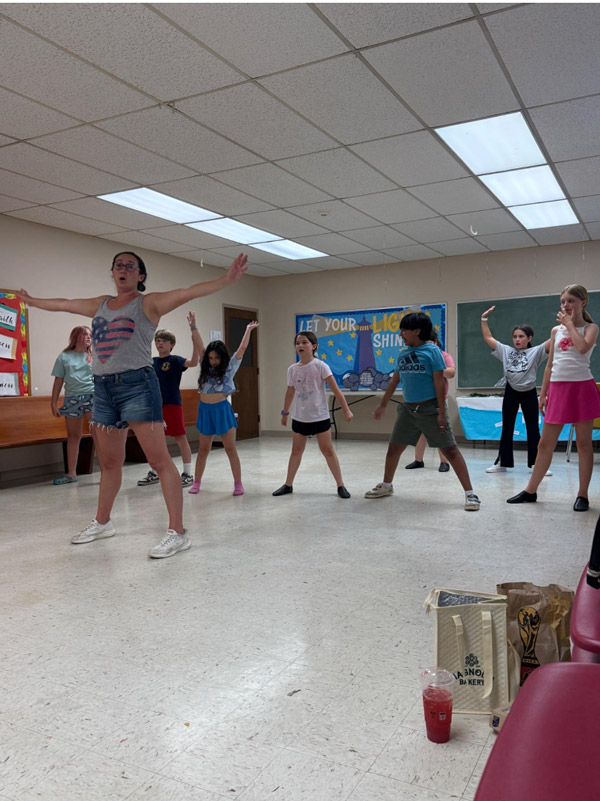
Community theatre asks ordinary people to do extraordinary things... after work.
Every piece of Wonka’s factory was built by someone who could have been somewhere else that evening. Instead, they chose to paint scenery after dinner. They chose to sew costumes after putting their own families to bed. They chose to rehearse after work, learn music, hang lights, answer emails, organize props, build sets, create choreography, solve problems, and imagine impossible things.
Not because anyone asked them to.
Because they believed a story was worth telling.
And because they believed an audience deserved to walk into a chocolate factory.
The Company That Makes It All possible
Walk into a rehearsal for Roald Dahl’s Charlie and the Chocolate Factory and one thing becomes immediately clear: this isn’t simply a cast.
It’s a community.
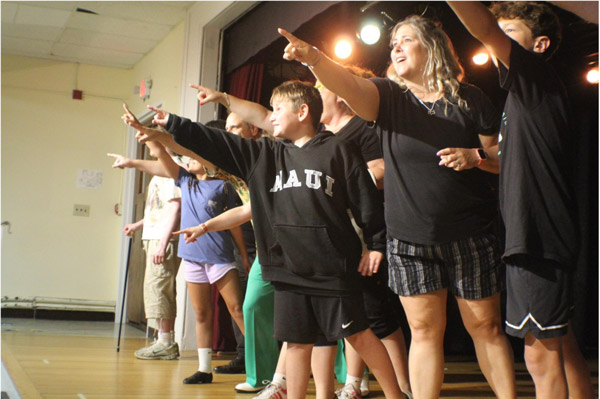
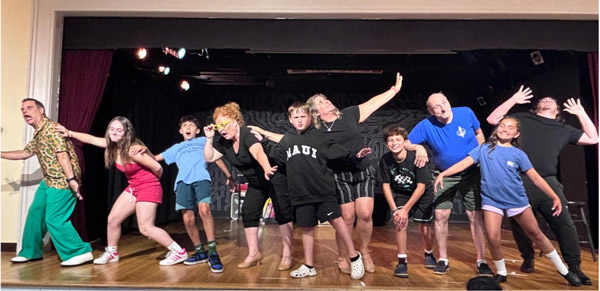
Children rehearse alongside adults. First-time performers share the stage with longtime Spotlight Players veterans. Parents watch proudly from the audience while volunteers quietly paint scenery in the next room. Between scenes, choreography is polished, harmonies are refined, props find their places, and someone inevitably discovers a new laugh that makes its way into rehearsal. Every corner of the room is filled with people contributing something uniquely their own.
From the youngest cast member to the most seasoned veteran, every rehearsal is a reminder that community theatre isn’t measured by budgets or buildings.
It’s measured by the people who choose to show up.
Some performers have spent years under stage lights. Others are stepping into a production of this scale for the very first time. Several of the youth roles have been double cast, giving even more young performers the opportunity to experience the joy, responsibility, and camaraderie that only live theatre can offer. Every rehearsal brings new discoveries, unexpected moments, and fresh ideas that quietly become part of the production.
For Christine and Sophia, one of the greatest surprises has been watching the company shape the show in ways neither of them could have anticipated.
“The talent that came out for this show has been amazing,” Christine says. “Everyone genuinely wants to be here. It’s the best environment to create in.”
Sophia agrees, especially when speaking about the youngest members of the cast.
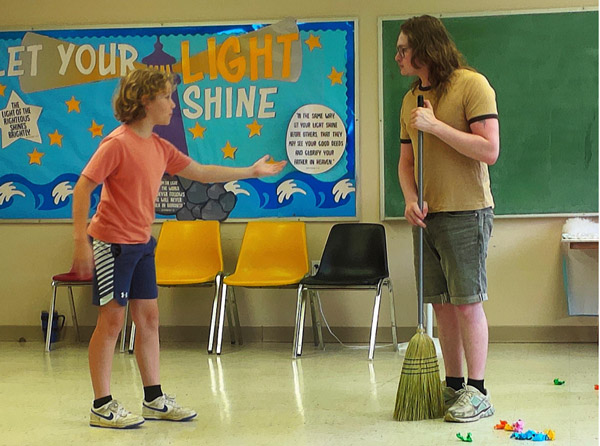
“The kids surprise us all the time. They discover things about their characters that neither of us had even considered. Watching them make those discoveries has been one of the greatest joys of this process.”
Perhaps that’s the most remarkable thing about community theatre.
No matter how carefully a production is planned, it never truly belongs to its directors. It slowly becomes the cast’s story, too.
Each rehearsal adds another layer. A new laugh. A different reaction. An unexpected moment that suddenly feels so right it couldn’t have happened any other way. The production grows because every person in the room is invited to leave a little piece of themselves inside it.
By opening night, Charlie Bucket’s journey will belong to everyone standing beneath those stage lights. And when the final curtain falls, the audience won’t simply be applauding a cast. They’ll be celebrating an entire community that chose, night after night, to turn the basement of a church into the most extraordinary chocolate factory in the world.
After the Factory Gates Close...
When the final curtain falls, the scenery will eventually be struck. Costumes will be carefully packed away. The lights will go dark, the orchestra will play its final note, and Wonka’s factory will once again become the basement of a church.
That’s the practical side of theatre.
The remarkable part is what leaves with the audience.
When asked what she hopes people are talking about on the ride home, Christine doesn’t mention standing ovations or spectacular special effects.
She talks about conversations.
“I want people to be amazed by the magic that can happen in the basement of a church theatre. I want them excitedly talking about the characters, saying, ‘Can you believe they...?’ or ‘Remember when...?’ Whatever those moments are for each family, we hope there are plenty of them.”
She smiles before explaining why those conversations matter so much.
“Sophia and I always leave the theatre talking about the shows we’ve just seen. We hope families leave talking the same way. We want to ignite that same passion we feel about theatre. That’s really why we do any of this. Audiences walking out happy and excited... that’s the best thing ever.”
Perhaps that’s the real Golden Ticket.
Not the one Charlie found tucked inside a Wonka Bar. The one every audience member carries home.
A memory.
A conversation.
A favorite character.
A song they find themselves humming the next morning. Community theatre doesn’t ask audiences to believe in magic.
It simply invites them into a room where ordinary people have spent months creating it for someone else.
For a few remarkable hours this August, a community of dreamers will transform lumber, fabric, paint, music, light, laughter, and an enormous amount of heart into the most extraordinary chocolate factory imaginable.
And when the factory gates finally close, the greatest thing audiences will take home won’t be the spectacle they witnessed.
It will be the feeling that, for just a little while, they believed right alongside the people who built it.
Maybe that’s the sweetest part of the story after all.
Performance Information
Roald Dahl’s Charlie and the Chocolate Factory Presented by Spotlight Players
Performance Dates
* Friday, August 7 at 7:30 p.m.
* Saturday, August 8 at 7:30 p.m. * Sunday, August 9 at 3:00 p.m.
* Friday, August 14 at 7:30 p.m.
* Saturday, August 15 at 7:30 p.m. * Sunday, August 16 at 3:00 p.m.
Tickets: our.show/spotlight/catcf
ALL PHOTOS BY Chuck Hamilton / Spotlight Players