
Here is Festival Director Al Nigrin’s interview with Counterfeit Kids Director/Writer James Sclafani! Counterfeit Kids screens at the New Jersey International Film Festival on Saturday, May 30, 2026.
Nigrin: Your short film Counterfeit Kids is set in 1980 in Baltimore and focuses on a foster brother and sister duo who counterfeit money. Tell us a bit about the history behind making this film.
Sclafani: Counterfeit Kids originally came out of a feature screenplay I wrote called King of Counterfeit, which I later sold to Bill Murray. The feature was inspired by a lot of real people and experiences I came across while doing research and spending time on the streets talking to all kinds of people.
The feature took longer than expected to get produced, so I asked Bill if I could make a short film as a proof of concept for myself as a director and for the material itself. But I didn’t want to just pull scenes from the feature. I wanted the short to stand on its own as a movie, so I created an entirely new story. None of the scenes in the short are in the feature.
When I started writing, I was heavily influenced by writers like Truman Capote and Nick Pileggi, people who explored real life heroes and villains in a very human way. I’ve always been interested in crime stories, but not just the crimes themselves. I’m interested in the people committing them, the families they come from, and the emotional impact it has on the people around them. I was also heavily influenced by Italian neorealist films that I would watch with my father.
At the center of the story is Nic, whose mother and her boyfriend take in Jude, a foster kid, for the money. But underneath the crime story, the movie is really about friendship, survival, and two damaged kids trying to find connection in a bad environment.
Nigrin: Your film has two amazing lead actors Emma Dchesneau as Nic and Richie Merritt as Jude. How did you find them and tell us how you ended up having them star in your film?
Sclafani: Emma came through Sheila Jaffe, who cast The Sopranos. I liked Emma immediately. At the time she was studying at NYU, and within seconds of the audition I knew she was Nic. She had this vulnerability, intelligence, and toughness that felt very real to me. Nic is a difficult character because she’s complicated. She loves her toxic mother, she protects Jude, and she’s trying to survive around her mother’s boyfriend and all the chaos surrounding that world. She’s street smart and guarded, but she still has hope underneath everything. You can feel that she’s wounded, but she hasn’t given up. I really had to find an actress who could bring all of this. A lot had to be going on internally, and Emma was able to do that. She came to the set fully prepared. I could tell she did a lot of work before we started rolling.
I met Richie Merritt through Daniel, who helped with our initial budget. He recommended Richie, and Sheila agreed he would be great for the role. Obviously, Richie had already worked with Matthew McConaughey in White Boy Rick, but what mattered most to me was not just that he was from Baltimore, but that he came from the same kind of area Jude did. He could walk that walk and talk that talk. I believed him immediately.
I realized very quickly that he was going to bring something more important to the role, which was authenticity. He brought a real sense of the street to the movie, and you can’t fake that. At the same time, he also has vulnerability and sensitivity. You believe he could counterfeit money, be a loyal friend to Nic, and toss hot coffee in Jerry’s face.
A lot of people who read the script imagined Jude and Nic as slick Hollywood criminals, but that was never what I wanted. I wanted them to feel real. And that’s why my uncle, who worked as our wardrobe manager, dressed Jude the way he did. He looks like he’s walking out of an MTV video in the 80s. Even though the story takes place in 1980, I think both Richie and Emma feel very relatable to younger audiences today.
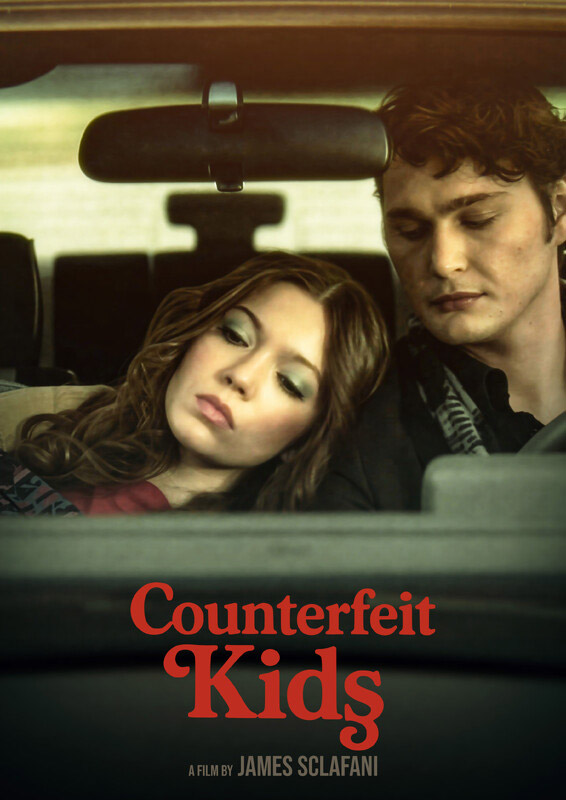
Nigrin: Daniela Milekovsky’s cinematography is amazing. Did you guys shoot on film? It looks like it. Tell us more about how she came to be the DP on your film.
Sclafani: My manager Eva and I looked at a lot of cinematographers, but we both loved Daniela right away. She’s a real artist. I was honestly shocked when I found out a lot of her work was shot digitally because I assumed it was film. That just shows how talented she is.
Originally, I wanted to shoot on film, but what mattered more to me was creating something that felt textured, vintage, and emotional. Daniela completely understood that. She also brought an incredible crew with her.
I’ve always loved films where the environment is rough but the movie itself still feels visually beautiful. Films like Do the Right Thing or Raging Bull do that so well. That was exactly the tone I wanted for Counterfeit Kids.
Daniela and I worked very closely together, and she really understood the emotional atmosphere I was trying to create. I think she elevated the film in every way. One of my friends, a very big director, told me the most important thing was to establish a very clear style so people understood what a James Sclafani film was. I knew Daniela was essential to that process. As a writer I had a very distinct voice and I wanted to have the same as a director.
Nigrin: Bill Murray is listed in the credits under Special Thanks. What role did he play in making your film happen?
Sclafani: Counterfeit Kids originally came out of King of Counterfeit, the feature script I sold to Bill Murray. The first thing Bill did was give me permission to make the short film, which meant a lot to me. He also helped behind the scenes in practical ways. At one point he even called a friend at a major production company to help us try and secure a visa for an actor I wanted for the film. Unfortunately, it didn’t work out, but I appreciated him taking the time to help us.
The whole experience taught me a lot and it will definitely help moving forward when we make the feature version.
Nigrin: The music is also amazing. Tell us more about the score and how it came to be.
Sclafani: Music was extremely important to me in this film because I grew up around it. My uncle played in a band called The Brats, so music was always a big part of my life. One of his Brats songs we use in the film is Rock Candy.
We actually open the film with one of my favorite songs written by my uncle called “Right on the Money” by The Brats. And then when the credits roll, we hear the solo from “Right on the Money,” which is another Brats song written by Keith West in The Brats and played by Scott Sheets, who was also a member of the band and an incredible guitarist. That solo plays us out.
Growing up in New York, we also loved the Ramones, and those bands all played in the same world and same clubs back then. I wanted the movie to feel authentic to that late seventies and early eighties sound. We actually have two Joey Ramone songs in the short, which was very important to me because his voice really captures the energy and attitude of the world we were trying to create.
When I was searching for music, I came across “Money Changes Everything” by The Brains, which most people know through Cyndi Lauper’s version, which is a classic. But there was also something raw and honest about the original recording that really fit the movie. Interestingly, Bill Murray also sings that song now with his band and gives a really cool, introspective performance of it in my opinion. For me, that song really captures Jude and Nic emotionally. It’s happy and sad at the same time. They want to believe money is going to change everything, but deep down we know it won’t. What really matters is the connection and friendship they have with each other.
Our producer, Sam Frankel, has been in the music business for years and also worked with Stan Lee. He had managed Slash and been partners with Jerry Heller, so he came in with a real depth of experience on that side. I was lucky because he brought me a really terrific music supervisor who was able to get us all this great music at a very affordable price. She was a pleasure to work with
Nigrin: Are there any memorable stories while you made this film or any other info about your film you would like to relay to us?
Sclafani: For me, Counterfeit Kids started as a proof of concept, but I also wanted it to work as a complete short film on its own. I had written features and television before, but I had never written a short film, and I didn’t realize how difficult that was. You really have to rethink storytelling and strip everything down to its essentials.
I also learned that when you direct a low budget film, you end up doing everything. I was helping scout locations, dealing with catering, booking hotels, and handling all kinds of things I never had to think about when I was just writing scripts. It was definitely culture shock, but I actually enjoyed it because I learned how every department works. I was lucky to have an incredible crew that really helped me through the process. I was lucky to work with people who I’ve known for years as well. As mentioned, the producer was Sam Frankel. Sam was one of the first people I met in Hollywood. I could’ve worked with many producers on the short and I’m glad I chose Sam.
I also worked with Oona Intemann. Oona started out as an intern for me and today works for a publisher. I was really happy she joined us as the script supervisor.
Our dialect coach was Jane Donovan, a friend I have known since second grade. And of course I was lucky enough to work with Joel Murray, who I met completely independent of Bill. I met Joel at Improv Olympic in Hollywood and thought he was a genius actor. I guess it runs in the family. We worked on an animation years back and I was really lucky to get him as Jerry. Not only was he an incredible actor in the short, he also helped on the set. So it was really nice to work with people I had known for quite some time.
Our main location was in Catonsville in Baltimore County. We rented the house of a woman I’ve known since second grade because she had a large family and we all grew up together around the neighborhood. I don’t think either of us realized we were basically going to take over her whole house during production, but she and her family were unbelievably kind and supportive.
The biggest thing for me personally was that my father was very sick at the time and I knew he was dying. He always loved this script and really wanted me to make it, so that became one of the main reasons I pushed forward with the short. He got to visit the set and he got to watch the finished film, which meant a lot to me because my father was a tough critic.
I also learned that sometimes you just have to make the movie and figure things out as you go. About a week before production, an actress dropped out because of a scheduling conflict, and I had to scramble to find someone to play Trisha. I didn’t want to delay the shoot. My cousin, television writer Elizabeth Beckwith, connected me with her friend Clodagh Boyer, who stepped in at the last minute and was fantastic. Clodagh had recently starred in and produced a film in Ireland that made the Oscar shortlist, so we were incredibly lucky to get her.
Counterfeit Kids screens at the New Jersey International Film Festival on Saturday, May 30, 2026 In-Person Only at 7PM in Voorhees Hall #105/Rutgers University, 71 Hamilton Street, New Brunswick, NJ 08901! Get more info and buy tickets here.
Here is more info on the films that will be shown at this screening.
Sundays – Ashley Gerst (Stoney Point, New York) In this intimate, 2D animated, memoir, a daughter navigates the aftermath of loss as she reflects on the weekly rituals she once shared with her father. 2026; 7 min.
Counterfeit Kids – James Sclafani (Washington, D.C.) Set in Baltimore in the 1980s, Counterfeit Kids is told through Nic, an eighteen-year-old who finds friendship and refuge with her foster brother Jude. Jude is a gifted artist and a counterfeiter. 2026; 11 min.
Middle Life – Pavan Moondi (Glendale, California) Middle Life follows Andie (Leah Fay Goldstein), a perfectionist wedding planner in her mid-thirties and new mother, who has meticulously crafted her life but still feels unfulfilled. Fresh off maternity leave, she saves Ryan (Peter Dreimanis, SINNERS), a blue-collar plumber, from a roadside accident. As their paths intertwine over the next year, her craving for change and his newfound perspective on life spark an unexpected connection, leading them to discover that life could be great. Middle Life stars July Talk singers/bandmates Leah Fay Goldstein and Peter Dreimanis. 2025; 84 min.
The 31st Annual New Jersey International Film Festival will be taking place on select Fridays, Saturdays, and Sundays between May 29-June 7, 2026. The Festival will be a hybrid one as we will be presenting it online as well as doing in-person screenings at Rutgers University. Most of the films will be available virtually via Video on Demand for 24 hours on their show date. VOD start times are at 12 Midnight Eastern USA. Each General Admission Ticket or Festival Pass purchased is good for both the virtual and the in-person when both are offered. The in-person screenings will be held in Voorhees Hall #105/Rutgers University, 71 Hamilton Street, New Brunswick, NJ beginning at 5PM or 7PM on their show date. General Admission Ticket=$15 Per Program; Festival All Access Pass=$120; In-Person Only Student Ticket=$10 Per Program. For more info on the Film festival go here: FESTIVAL WEBSITE