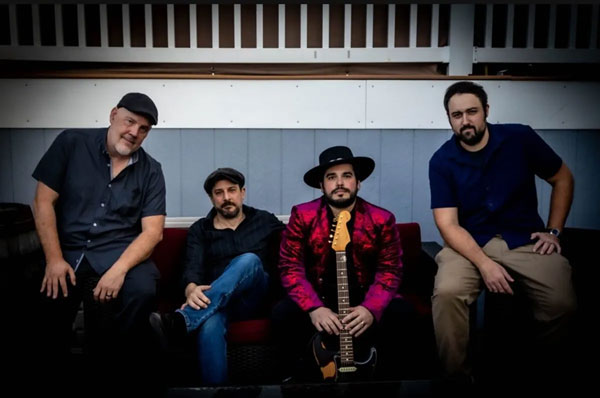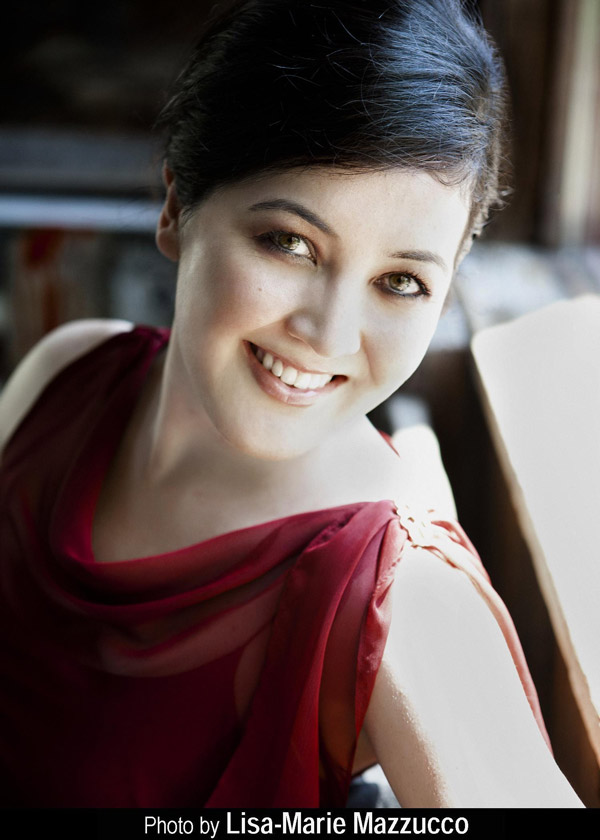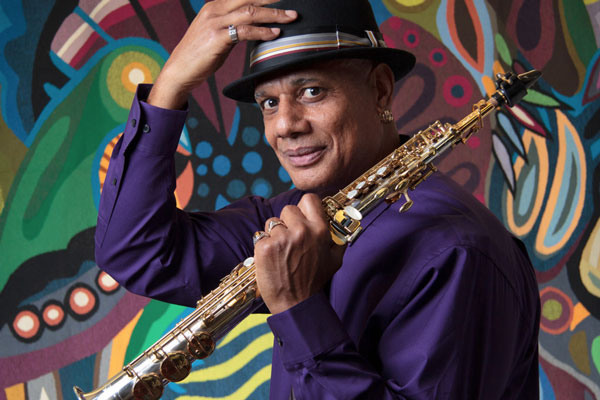

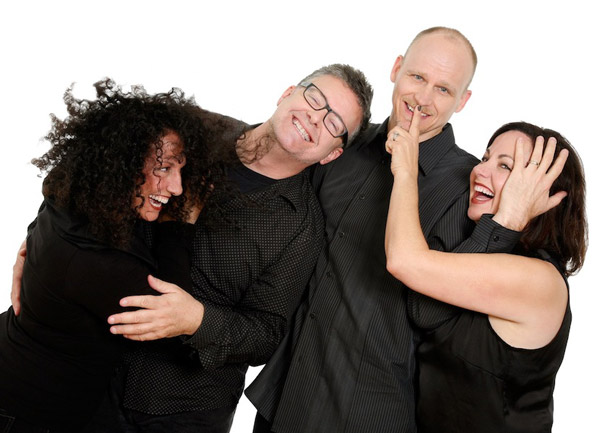
From left, Nazarian, Eldridge, Meader, and Kinhan
Originally published in Jersey Jazz Magazine. Reprinted by permission of the New Jersey Jazz Society.
Vocal groups hold an underappreciated place in the jazz idiom. 'Jazz-heads' (read: snobs) often dismiss them as trite or pop-oriented, perhaps likening them to a college a cappella troupe or disdaining them as antiquated. The New York Voices are far from that. They are serious musicians, advancing jazz music while honoring its past. The group is part of a lineage of jazz vocal groups that have celebrated the music as far back as its creation. For the past several decades, they have been the gold standard for the sub-genre.
This past year, the New York Voices announced that, at the end of 2026, they will be retiring. This will leave a void in the scene, one that initially widened when their peers, the Manhattan Transfer, called it quits in 2023. The Voices won’t leave quietly, however. They have a packed schedule for the remainder of this year and through 2026, starting with "A Swingin' Christmas" concert at Ramapo College's Berrie Center on December 13, followed by holiday performances at New York's Birdland December 19-21. This past October, the New York Voices found themselves in the midst of a short tour and recording session in Taiwan – the Voices may have originated in New York, but the music is certainly global. (The group was interviewed via Zoom while on location in Taiwan).
The New York Voices consist of Darmon Meader (tenor), Kim Nazarian (soprano), Lauren Kinhan (soprano), and Peter Eldridge (baritone), with Meader serving as nominal group-leader and key arranger. Original members -- Meader, Nazarian, and Eldridge -- met as students at Ithaca College in the 1980s, with other original member and fellow Ithaca student, Caprice Fox. As members of the Ithaca College Jazz Vocal Ensemble (IC JVE), under the tutelage of the late, renowned Ithaca vocal professor Dave Riley (who coined the group’s name), in 1986, they embarked on a European tour, stopping at the Montreux and North Sea Jazz Festivals as they transitioned from students to professional musicians.
“(Playing at the festivals) was kind of the bridge between post-school and pre-professional,” Nazarian said. “We weren’t in school any longer but we weren’t pros yet. But we did this gig and it was received so well that we decided to continue the group back in New York.”
The group moved to New York in 1987, with Sara Krieger joining as a second soprano. They continued as a quintet (the Voices on the European trip consisted of six singers) in order, according to Nazarian, to differentiate the Voices from the Manhattan Transfer.
In February 1988, after about a year of navigating the treachery of the New York music scene, the Voices landed their first gig, at historic Town Hall, a concert hosted by the IC JVE. The concert was, according to the group, a roaring success. “The response was wonderful,” Nazarian added. The group met its agent that night, and, astonishingly, within a year the Voices landed their first record contract. GRP Records released a self-titled album in 1989. The Voices distinguished themselves, according to Meader, by writing their own music, which was unique for vocal groups at the time.
Somewhat established by the turn of the next decade, the next few years nevertheless marked a period of constant hustle, living gig to gig, with members also playing the wedding and Bar Mitzvah circuit in order to make ends meet. “We were just doing the New York scene,” Meader recalled. “Playing the clubs and trying to make some noise, making no money. Whatever money came at the door we paid our rhythm section, just grinding it out. Grinding away because we loved the music. It was a labor of love. So, it started that way, but it just kind of continued to grow.”
Eldridge's favorite story: “Our [debut] album came out, and so did (a cappella gospel group) Take 6’s debut album around the same time. And, we did a double bill with Take 6 at Carnegie Hall. So, we had this glorious, exciting Carnegie Hall debut, and the next afternoon Darmon is playing a Bar Mitzvah out on Long Island.” And, added Meader, gleefully, "I made more money at the Bar Mitzvah!”
The constant grinding and hustling eventually paid off, however, as the Voices ultimately released a string of successful albums over the ensuing decades and developed a robust following through constant touring. Krieger left the group in 1992 and was ultimately replaced by Kinhan. Fox left the group in 1994, and the makeup has been constant ever since.
The uniqueness of the Voices can be attributed to the group’s successful blend of original material, covers of beloved pop hits, and faithful but distinctive renditions of jazz standards, including many that may not necessarily be familiar to mere casual fans. The Voices are true students of the genre. The group has successfully adapted such jazz standards as “Autumn Leaves,” “Darn That Dream”, and “Giant Steps,” but at the same time has also dedicated an entire album to Paul Simon arrangements, Sing the Songs of Paul Simon (RCA, 1997).
“From a repertoire standpoint, each song has its own story,” said Meader. “Sometimes I might write an arrangement that I think is kind of fun, and present it to the group. But then sometimes Kim might say, for example, that ‘I’d love to do this Duke Ellington tune’ or Peter has written a song, or Lauren has written a song, and they’ll present it to the group. Or maybe one of them has written a tune, and they’re doing it on a solo gig, and the rest of us go, ‘Hey, we want to sing that!’ and then we’ll move it over to our book.”
Meader described himself as, “sort of the nuts-and-bolts arranger in the group. The ideas germinate in many different ways. I'm the one that, at the end of the day, gets it all into the computer and makes it something that we can all work with. Peter also generates a lot of the initial harmonic ideas and conceptual ideas of songs."
Added Kinhan, “We are also really proud of how much thought we put into trying to sound like a four-headed solo artist. We really work at trying to carve into how to make the lyrics and how to make the four of us sound like one solo artist, so you get that emotional context that comes when it’s just a solo singer who gets to make a solo statement. We really try to have that hit you that way with four of us.”
Nazarian feels, “It’s also a comment on the writing, too, because the writing is so very good, and the voice leading is so very good that it makes what we do, which is pretty difficult, seem easy. One of the things that sets us apart from other groups,” she added, “is that there is so much instrumental influence in what we do, whether it's singing four-part chords, whether it's melodic embellishment with leads, whether it's improvising.”
Indeed, the Voices often collaborate with instrumentalists or big bands that are at the highest level of the genre. The group co-released an album with legendary woodwindist and NEA Jazz Master Paquito D’Rivera, Brazilian Dreams (MCG Jazz, 2002), to wide acclaim, and has performed or released music with Bobby McFerrin, the Count Basie Orchestra, and the Dizzy Gillespie, WDR and Bob Mintzer Big Bands, among many others.
Referring to the collaboration with D’Rivera, Meader said, “It was a wonderful marriage, that we got to perform that music together." Added Kinhan: "Those were some of our most joyful concerts because it allowed us to live outside of our framework a little bit, not only because Paquito is amazing, but so is his band.”
Nazarian said, “When you work with the likes of Paquito D’Rivera and Bobby McFerrin, you are elevated to a place that you can’t get to on your own. You kind of feel weightless, and anything and everything is possible. When you are cradled by the artistry of a Paquito D’Rivera, his band, the audience, the repertoire, it just becomes a different world.”
Through the end of 2026, the Voices are impressively busy. The group plans to release as many as three new recording projects (including the Taiwan sessions) and tour throughout the period, including final shows with D’Rivera, the Count Basie Orchestra, and Ivan Lins with the Danish Radio Big Band, as well as a big farewell concert in New York. Next summer the group will also hold its final vocal jazz camps for professional and aspiring singers at Western Michigan University and in Germany. “It’s going to be a cacophony, and it’s going to be thrilling!” said Kinhan.
Post-retirement, the four Voices plan to continue their various musical and educational endeavors. Each member has a robust solo career, as well as teaching positions with prestigious collegiate music programs (Nazarian will also be releasing a book on vocal technique, and Meader’s has already been published). But their artistry stems from the Voices, and while the decision to end the group is most certainly bittersweet, the members are ultimately at peace with it.
“One of the things that's really nice about our decision is that I think we've collectively come to the same place,” said Meader. “The nature of what we do, it's an athletic kind of singing. I feel kind of like we're the 40-year-old quarterback. We know how to do it, and we've got a lot of experience. But at a certain point, you have to say, okay, it's time to hang up the cleats, or in our case, hang up the microphones.”
Added Kinhan, “We've been around so long, and a lot of the people that we educated are full-blown artists, or teachers. Bumping into all these people along the way that are telling us that we’ve changed their lives -- we are very touched and moved. It’s very humbling to know that our work has meant something to people. So, this is going to be an interesting long walk into the sunset for us.”
Music enthusiasts are encouraged to join the Voices for that long walk into the sunset.
The Berrie Center for the Arts is located at 505 Ramapo Valley Road on the campus of Ramapo College in Mahwah, NJ. The "A Swingin' Christmas with New York Voices" concert will begins at 8:00pm on Saturday, December 13, 2025. For more information or to order tickets, log onto ramapo.edu/berriecenter or call (201) 684-7844.
The New Jersey Jazz Society is a non-profit organization of business and professional people, musicians, teachers, students and listeners working together for the purpose of advancing jazz music. Their mission is to promote and preserve America’s original art form – jazz. The Society seeks to ensure continuity of the jazz art form through its commitment to nurture and champion local talent, along with showcasing outstanding national and international artists providing for the younger generation via arts education programs.