
United States Super 8 Film + DV Festival Celebrates 30th Anniversary!
By Al Nigrin
Super 8mm film was introduced in 1965 by Eastman Kodak at the World’s Fair in New York to help the average person document their everyday lives. Super 8mm was most widely used for filming home movies between the mid 1960s till the early 1990s. Today amateur usage of Super 8mm has been replaced by digital video but the format is still regularly used by filmmakers, artists and students. Some hope to imitate the look of old home movies. Others want to create alternative looks for flashback sequences and altered states of consciousness. Some just like the idea of creating images in the classic style of using actual film. Super 8mm is a relatively inexpensive film, making it popular among filmmakers working on a low budget who still want to achieve the look of real film. Super 8mm has become quite common in theatrical features. J.J. Abrams 2011 film Super 8 pays homage to the little film format. Guy Maddin’s surreal 2006 film Brand Upon The Brain and Jim Jarmusch’s 1997 film Year of the Horse -- a documentary on Neil Young’s band Crazy Horse -- use it too.
I fell in love with Super 8mm when I started making films in 1982. I liked the fact that you were pretty much in control of every aspect of the filmmaking process. I could even develop the film myself. So it was the DIY aspect of Super 8mm that first lured me in but it was the grainy, oneiric (dreamlike) quality of the film stocks that sold me on this format. I have since made over 30 short (mostly experimental) films using Super 8mm. I started touring my work and showing it all over and then met two of the biggest Super 8mm film supporters in the USA. They are the husband and wife team of Bob Brodsky and Toni Treadway. They founded and ran the International Center for 8mm Film and Video in Massachusetts for over 30 years. Through their non-profit organization they subsidized many Super 8 filmmaker by sending them to film festivals in the USA, England, France, Venezuela, Brazil, Canada, and others. It was thanks to them that I got to visit so many wonderful festivals and countries. The largest United States-based Super 8mm Film Festival in the 1970s and 1980s was the one in Ann Arbor, Michigan. Bob and Toni sent me there to show a package of experimental films that I had curated in 1986 but by 1988 the people who ran this legendary festival decided they were going to cease operations. So Bob and Toni suggested that I create one at Rutgers since I had set up the Rutgers Film Co-op/New Jersey Film Festival back in 1982. So I did and called it the United States Super 8mm Film Festival. The first of these was a curated program where I invited Super 8 filmmakers that I admired to screen their work but the 29 that followed were juried festivals where a panel of judges picked the winners. The Festival has changed over the last 3 decades going from screening Super 8mm films exclusively to then including Hi 8mm videos and now digital videos. So I thought it would be nice to ask some of the filmmakers who are finalists in the 2018 United States Super 8mm Film and DV Festival to talk about Super 8 and the films they are showing at this year's program. The filmmakers that I spoke to are: James Hollenbaugh, Director of The Paintings Paint Themselves who lives in Lancaster, Pennsylvania; Laua Sanz, Cinematographer of The Flood who lives in Cuba; Alex Faoro, Director of Cold Butter who lives in Brooklyn, New York; and Daniel Macarone, Director of Keep Dreaming who lives in Summitt, New Jersey.
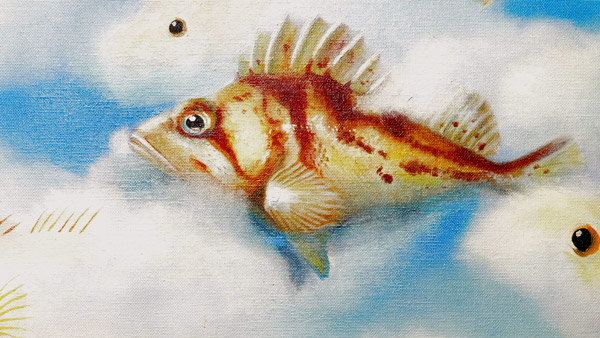
James Hollenbaugh's The Paintings Paint Themselves
Nigrin: Tell us about your film that is a finalist in the 2018 United States Super 8mm Film & Digital Video Festival and why you decided to make it.
Hollenbaugh: The Paintings Paint Themselves is a short portrait style documentary about self taught artist, Bill Mayer. Mayer lives in the Catskills area of New York and has been painting for over twenty years. Mayer lives in a 200 year old hotel and has been creating some incredible visual art which has mostly been unseen by the public. This film is the fourth in a series I have been creating about largely unknown self taught artists.
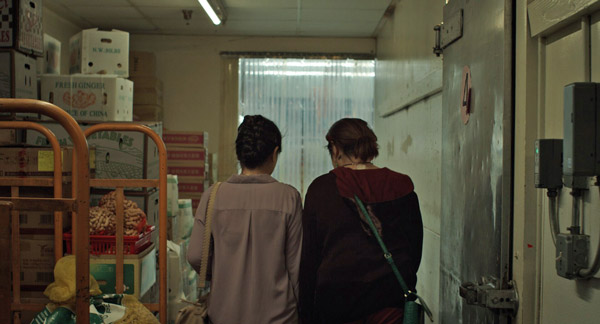
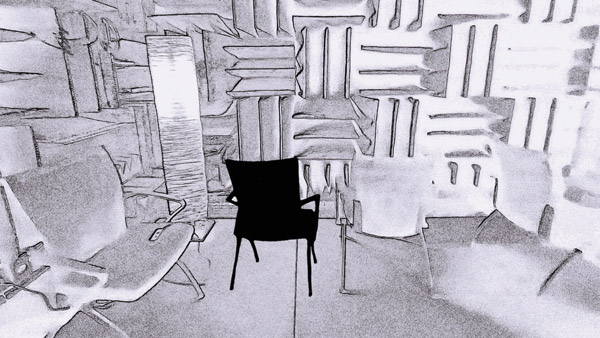
Sanz: We are very excited that United States Super 8mm Film and Digital Video selected The Flood which is a post-apocalyptic film. We are happy to have our premiere in the United States. The short was filmed in an empty pool. Illumination was more about cutting the light that bounced everywhere. We did the developing in a dark room and the digitization was done manually in with my homemade 8mm projector.
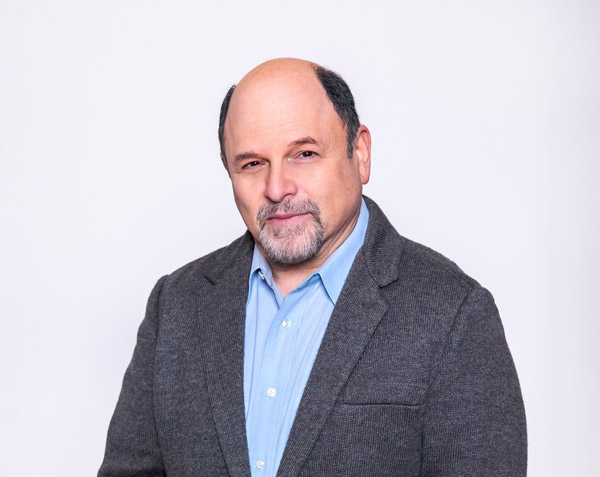
Faoro: Cold Butter is an absurdist docu-fiction film. In both style and approach, it is inspired by the early work of Lionel Rogosin; an independent American filmmaker who created movies that walked the line between documentary and fiction. Having been trained in conventional documentary practices myself, I’m particularly interested in this methodology because I believe it rejects normative concepts of truth generally employed in that field (something I have become increasingly disillusioned by). In fact, it was my frustration of having to operate within particular genre parameters that elicited the expressed frustration in Cold Butter. Additionally, it is a product of certain personal dissatisfactions in life. In short, creating this film provided me an opportunity to explore both my grievances with life and the traditional pursuit of truth used to dissect its apparent meaning.
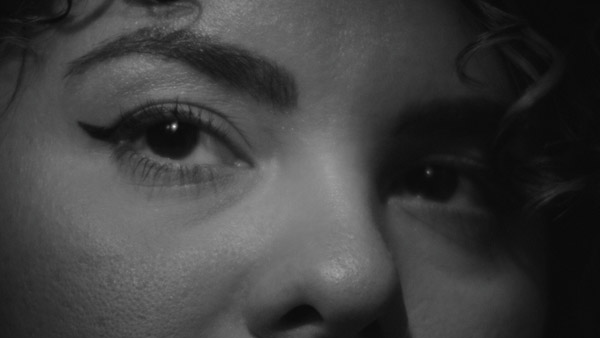
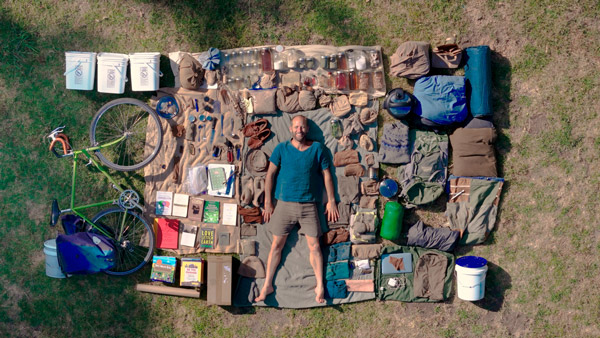
Macarone: Keep Dreaming is a psychological suspense film about a reoccurring dream. A man uses a seductress' charm to lure another man onto a rooftop and into a trap. The idea began when I decided to make a film in the same vein as my previous film, Again, which had its premiere at the Super 8 & DV Festival in 2016. Again told the story of an endless chase, which, in the end, leaves you right where the film began. I felt I could tell another story that way with Keep Dreaming. Both films have no spoken word; I enjoy practicing the art of visual storytelling in cinema.
Jeissy Trompiz and Laua Sanz's The Flood
Nigrin: Why did you shoot your latest project in Super 8mm film?
Hollenbaugh: I have been working with Super 8mm film since 1999 when I was in college. Most of my personal work has been shot in this format. I enjoy the limitations of shooting on film and I am excited by the raw look of it and it's unique texture. I shoot a lot of video in my day to day job so being able to work with film makes these projects extra special for me. Sometimes it is more challenging and it is certainly more expensive, but always worthwhile.
Sanz: Jeissy Trompiz, the director, and myself, the cinematographer, shot in Super 8mm because we thought it would best for the story. The textures, and the black and white give a disconcerting touch to the short film, a touch that the story needed to give it authenticity.
Faoro: I shoot all my work using super 8mm. I chose specifically to hand-process Cold Butter because I wanted to give the film more texture and grit… something vaguely reminiscent of a 1970’s exploitation picture. Again, I think this has to do with my love for the history of cinema and a fascination with genre blending practices.
Macarone: I love motion picture film and Super 8mm is the most affordable film format for me. I make the best with what I have, that being a small format and I enjoy the challenge of achieving impressive results. The makers of Super 8 products wished to simulate 16mm and 35mm and that is also my wish. My DP Benjamin Zimbric treats Super 8 as a legitimate format, which I greatly appreciate. Today, with up to 5K scanning, we can see digitized Super 8 footage with practically all of its original resolution. There is also Max8 (Super 8 cameras with a modified gate for widescreen). These advancements have made Super 8 a very viable option for the digital age. Super 8 also has a Kodak black and white stock, which Keep Dreaming was shot on and I feel that there is nothing like true black and white film. Converting color to B&W in post-production is a weak substitute.
Alex Faoro's Cold Butter
Nigrin: Do you find getting Super 8mm materials and film more difficult these days?
Hollenbaugh: I actually find obtaining Super 8mm film and materials to be equally if not more accessible than it was when I started nearly twenty years ago. A lot more labs and transfer houses have been popping up. As well, Pro 8mm and Kodak seem to be staying in the game, releasing new stocks and technology each year. I enjoy the hybrid use of analog and digital technologies by shooting on film and then having it transferred to HD video for editing. It brings the two technologies together and is a great workflow for me.
Sanz: Yes, it was difficult to find film in Super 8mm. We had to search a lot on the internet. In the end it was my sister sent us the film stock from Barcelona to Cuba.
Faoro: Since moving to New York this past summer, I’ve been a working member of Mono No Aware - a Brooklyn based cinema arts non-profit organization with a strong educational initiative. As such, I’ve had incredible access to a variety of super 8mm equipment and film stocks. Additionally, I’ve had the opportunity to teach super 8 shooting/hand-processing classes. Being a part of a community like Mono has given me the necessary support and inspiration to both continue my personal super 8mm practices and spread my knowledge and enthusiasm to others.
Macarone: No, they are very easy to find. Super 8 Film is processed and scanned at several labs all over the world. Pro8mm in Burbank is a one-stop-shop with cameras, stock, processing, and scanning. Raw stock can also be purchased from B&H Photo Video. Super 8 cameras can be found in used working condition on the web and some shops still service them.
Daniel Macarone's Keep Dreaming
Nigrin: Will you continue shooting in Super 8mm in the future?
Hollenbaugh: I will continue to shoot Super 8mm film as long as it is still made. I love working with the format.
Sanz: Yes, as long as conditions and stories allow it. Right now I have another film in mind, but this time in color.
Faoro: Again, all my work is shot on super 8mm. I will continue working on this medium as long as it is available. As Jonas Mekas said, “I make home movies, therefore I live. I live, therefore I make home movies.”
Macarone: Yes, I will shoot on Super 8mm as long as it is available. I am excited to see it stay alive.
***************************************************************************************
2018 United States Super 8 Film & Digital Video Festival
View the winning films and digital videos of the International U.S. Super 8 Film + Digital Video Festival, selected by a jury of filmmakers, Rutgers University students, and media professionals. The festival--now in its 30th year—will feature finalist works and previous winners by independent filmmakers from the United States and around the world. Go to www.njfilmfest.com to see the complete festival line-up. Approx. 80 min.
Friday + Saturday, February 23+24, 2018
7:00 p.m.
Voorhees Hall #105/Rutgers University
71 Hamilton Street, New Brunswick, New Jersey
$12=General; $10=Students+Seniors; $9=Rutgers Film Co-op Friends
Information: (848) 932-8482; www.njfilmfest.com
Jimmy John’s of New Brunswick will be providing free food prior to all New Jersey Film Festival Screenings!
Al Nigrin is a Cinema Studies Lecturer at Rutgers University. In addition, he is the Executive Director/Curator of the Rutgers Film Co-op/New Jersey Media Arts Center, Inc., which presents the Bi-Annual New Jersey Film Festival and the United States Super 8mm Film + Digital Video Festival.