
(CLIFTON, NJ) -- The NJSO Chamber Players perform a free program of popular Broadway tunes from West Side Story, The Sound of Music, The Lion King and more on Thursday, October 12, at 7:30pm at Clifton School #3 in Clifton. The event is part of the Clifton Centennial Concert Series and is sponsored by the PSEG Foundation.
The string ensemble features NJSO violinists Darryl Kubian, JoAnna Farrer, Minji Kwon, Rebekah Johnson, Ming Yang, and Fatima Aaziza; violists Elzbieta Weyman and Martin Anderson and cellists Sarah Seiver and Hyewon Kim.
“Audiences of all ages will enjoy some of the most famous melodies from Broadway hits,” says NJSO Director of Institutional Giving Ingrid Novak. “The NJSO is proud to partner with the PSEG Foundation to make free community concerts like this possible.”
The performance is made possible through a multiyear partnership between the New Jersey Symphony Orchestra and PSEG Foundation to celebrate diversity within communities and provide unique cultural experiences.
”Our continued partnership with the New Jersey Symphony Orchestra allows us to build upon our commitment to bringing diverse experiences in to the communities in which we serve,” said Ellen Lambert, President of the PSEG Foundation. “These free concerts can serve as a wonderful opportunity for multi-generational families to be exposed to cultural experiences they might not otherwise have the chance to enjoy.”
The concert takes place in the auditorium of Clifton School #3, located at 365 Washington Avenue in Clifton.
NEW JERSEY SYMPHONY ORCHESTRA
Named “a vital, artistically significant musical organization” by The Wall Street Journal, the New Jersey Symphony Orchestra embodies that vitality through its statewide presence and critically acclaimed performances, education partnerships and unparalleled access to music and the Orchestra’s superb musicians.
Music Director Xian Zhang—a “dynamic podium presence” The New York Times has praised for her “technical abilities, musicianship and maturity”—continues her acclaimed leadership of the NJSO. The Orchestra presents classical, pops and family programs, as well as outdoor summer concerts and special events. Embracing its legacy as a statewide orchestra, the NJSO is the resident orchestra of the New Jersey Performing Arts Center in Newark and regularly performs at the State Theatre New Jersey in New Brunswick, Count Basie Theatre in Red Bank, Richardson Auditorium in Princeton, Mayo Performing Arts Center in Morristown and bergenPAC in Englewood. Partnerships with New Jersey arts organizations, universities and civic organizations remain a key element of the Orchestra’s statewide identity.
In addition to its lauded artistic programming, the NJSO presents a suite of education and community engagement programs that promote meaningful, lifelong engagement with live music. Programs include school-time Concerts for Young People, NJSO Youth Orchestras family of student ensembles and El Sistema-inspired NJSO CHAMPS (Character, Achievement and Music Project). NJSO musicians annually perform original chamber music programs at community events in a variety of settings statewide.
For more information about the NJSO, visit www.njsymphony.org .
The New Jersey Symphony Orchestra’s programs are made possible in part by the New Jersey State Council on the Arts, along with many other foundations, corporations and individual donors.
PSEG FOUNDATION
The PSEG Foundation (501c3) is the philanthropic arm of Public Service Enterprise Group (NYSE:PEG). The Foundation generally supports and invests in programs in three areas: community and the environment, education and safety. The Foundation provides grants to organizations in communities served by PSEG and its subsidiaries. PSEG (NYSE: PEG) is a diversified energy company based in Newark, NJ. PSEG has three main subsidiaries: PSE&G, NJ’s largest and oldest combined gas and electric delivery company, PSEG Power, a merchant power generation company, and PSEG Long Island, operator of the Long Island Power Authority’s transmission and distribution system.


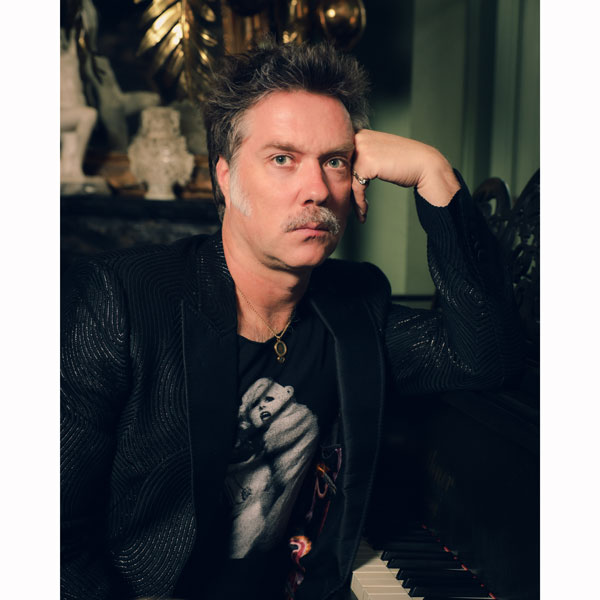
Praised as “the greatest songwriter on the planet,” by Sir Elton John, Rufus Wainwright joins the Princeton Playhouse Sinfonia for a special one-night-only engagement performing selections from his albums Rufus does Judy at Carnegie Hall and Want One, Want Two, and beyond. Princeton Playhouse Sinfonia is a dynamic new collaborative ensemble that brings together student musicians from Princeton University's Sinfonia, directed by Ruth Ochs, and Princeton Playhouse Orchestra, directed by Solon Snider Sway, alongside members of the Princeton Jazz Ensembles and local professional musicians.
On the mark of its 20th anniversary this year, Wainwright’s “Rufus Does Judy” is undoubtedly one of the most sensational shows from his incredible career, an exhilarating and loving recreation of Judy Garland’s infamous 1961 comeback concert. “Rufus Does Judy” made its premiere at Carnegie Hall in 2006 and garnered Wainwright’s first GRAMMY nomination for Best Traditional Pop Vocal Album. The full program has been performed globally including the London Palladium, Hollywood Bowl, Paris’ L'Olympia, and Toronto’s Luminato Festival. For the Colorado Symphony show, Wainwright will curate a special selection of his favorite songs from the album. 2026 will be the last time Rufus reprises this iconic show.
Rufus Wainwright’s Want One and Want Two have earned recognition as iconic albums worldwide, with Paste Magazine elevating Want One to the No. 1 album of the year, and Rolling Stone Magazine listing it in their top 5 best albums of 2003. Bowie hailed Wainwright’s song ‘Dinner at Eight’ as the “best father/son song he knew”. 22 years later, these songs have been given new life through lush symphonic arrangements by Sally Herbert (Woodkid, Florence + the Machine) and Max Moston (Antony and the Johnsons).
Combined in one program, these works form just a few of the many pillars of Rufus Wainwright’s extensive career—works that define his singular voice and fearless emotional range, merging vulnerability with spectacle, tradition with reinvention. Decades on, these songs continue to resonate as the foundation of Wainwright’s legacy.