

Musicians will have memories of weather extremes. There’s the ideal: The evening in concert, singing under the stars, my hair blowing in the balmy breeze. Ever the romantic, a perfect memory doing what I was born to do.
But then….there was the pool party. A pianist and I during a July heatwave. No shelter, no hat. A continuous four-hour gig. Except for a five-minute break every hour, the sun beat down on my head---continuously.
I ended up in a hospital, with my brain so overheated it became like a broken Thermostat stuck on high and unable to efficiently run my body’s systems.
That was my first huge exacerbation of Multiple Sclerosis symptoms, and it nearly killed me. If I knew I had MS, I would have known that MS and heat (or extreme cold) are not friends, and I would have worn a sun hat and sunglasses. Also, as alcohol is not a good thing in MS, I would have refused the cold beer on my five minute break!
And were it today, older and wiser, I wouldn’t have accepted the gig!
The thing is, we don’t always know that we have the genesis of an auto-immune or neurological disease inside us, and that it could express itself during some perfect storm as mine did.
Working outside in high heat and humidity can cause a flareup of fibromyalgia, MS, rheumatoid arthritis, asthma and other ailments. People who take blood pressure meds are at an increased risk because the body’s ability to cool down has been compromised, either partially or fully. Heat stroke or heat exhaustion can happen to anyone, young or old.
Use common sense for performing outside in summer: Stay hydrated. Take a cooler with water or electrolyte beverages. Wear fabrics that breathe like cotton and avoid polyester and blends. Wear a hat or cap. The best advice comes from my friend, bass player and Toms River ex-pat Bill Arzt in Florida, invest in a personal fan.
In a discussion of gigs from hell, Bill told me, “Personal fans are the norm in Florida, even when production companies provide big roll-around fans like you’d find in a body shop.” Bill researches to find the best product at the best price. He was kind enough to share his experience about cooling fans.
He emailed me: “Tough night last night. Played outdoors and the heat was brutal. Fortunately, it was only a 3-hour gig, but once what little breeze we had was gone the humidity went WAY up and it became stifling. Thank God for my big blue fan! It’s an older Lasko Model 4962.
“The newer versions of that same blower are gray and black and are either a Lasko Model U15700 or a Model U15701. They’re pretty much identical in appearance and specification. I got mine at Sam’s Club for about $40, a long time ago. The newer version is available at Sam’s for about $65. It’s a serious fan, for sure. Last night I had it sitting on top of my amplifier, blowing on my back & head. I find if I can keep my torso in the air stream I can manage the heat better.
“The black piece is the air outlet. What you can’t see easily from the pic is the fact that the entire body of the fan (the blue part with the black piece) rotates up & down within the black end pieces, so aiming it is pretty easy. (The power cord is not depicted.) The outlets come in VERY handy for powered monitors or other fans.
“I have a smaller Stanley fan, Model 655704 that I got at Walmart for $50, but I prefer the larger Lasko (above) because it moves more air and has a bit wider dispersion pattern. It has 3 speeds, but I mostly use the 2 slowest ones. Good to know that the last speed is there if I need it, though. Almost everyone I work with comments at some point on how great it is to have a fan like that on stage.”


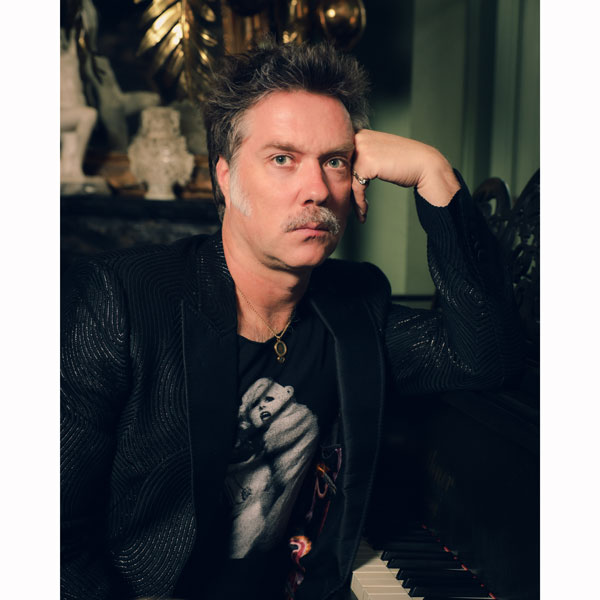
Praised as “the greatest songwriter on the planet,” by Sir Elton John, Rufus Wainwright joins the Princeton Playhouse Sinfonia for a special one-night-only engagement performing selections from his albums Rufus does Judy at Carnegie Hall and Want One, Want Two, and beyond. Princeton Playhouse Sinfonia is a dynamic new collaborative ensemble that brings together student musicians from Princeton University's Sinfonia, directed by Ruth Ochs, and Princeton Playhouse Orchestra, directed by Solon Snider Sway, alongside members of the Princeton Jazz Ensembles and local professional musicians.
On the mark of its 20th anniversary this year, Wainwright’s “Rufus Does Judy” is undoubtedly one of the most sensational shows from his incredible career, an exhilarating and loving recreation of Judy Garland’s infamous 1961 comeback concert. “Rufus Does Judy” made its premiere at Carnegie Hall in 2006 and garnered Wainwright’s first GRAMMY nomination for Best Traditional Pop Vocal Album. The full program has been performed globally including the London Palladium, Hollywood Bowl, Paris’ L'Olympia, and Toronto’s Luminato Festival. For the Colorado Symphony show, Wainwright will curate a special selection of his favorite songs from the album. 2026 will be the last time Rufus reprises this iconic show.
Rufus Wainwright’s Want One and Want Two have earned recognition as iconic albums worldwide, with Paste Magazine elevating Want One to the No. 1 album of the year, and Rolling Stone Magazine listing it in their top 5 best albums of 2003. Bowie hailed Wainwright’s song ‘Dinner at Eight’ as the “best father/son song he knew”. 22 years later, these songs have been given new life through lush symphonic arrangements by Sally Herbert (Woodkid, Florence + the Machine) and Max Moston (Antony and the Johnsons).
Combined in one program, these works form just a few of the many pillars of Rufus Wainwright’s extensive career—works that define his singular voice and fearless emotional range, merging vulnerability with spectacle, tradition with reinvention. Decades on, these songs continue to resonate as the foundation of Wainwright’s legacy.