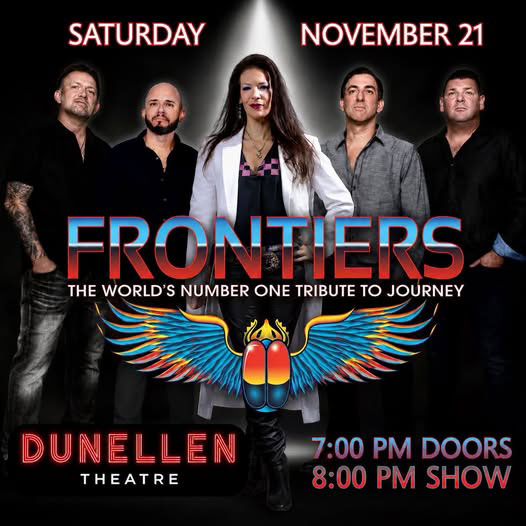


Credit is due Facebook for changing the way we communicate with our peers, our fans, prospective audiences and prospective employers, making musicians’ lives easier.
I was thinking about the way we once promoted gigs and built a fan base; how time consuming and expensive it was before we had cell phones, email, and FB. The newest generation of working players and singers can’t know how lucky they are unless a veteran of the trenches clues them in. (Have you noticed that older musicians use the language of warriors? Even as recently as 15 or so years ago, making a living as a musician with no more than local fame was a struggle. And non-musicians were called “civilians.”)
It’s always been best to send out promo that’s attractive, and anyone with a computer can do so today. Back in the day, however, an entertainer would visit a print shop and tell a staffer what he wanted to say in the promo piece… and maybe bring a by-hand mock up. He would confer on the design and provide a photo which would cost at least an extra $10 to print.
It would be safest to pay more for heavier paper, as all-purpose copy paper, though cheaper, would arrive in a physical mailbox wrinkled or torn and that’s not good for one’s image. If you ordered a colored piece it would cost far more than black and white. The printing bill might cost as much as the gig paid and sting especially hard if you were promoting a one-nighter and you hadn’t built a dependable following.
It would be more cost effective if you had a few dates to advertise in the piece… but not always easy to set that up. And a big but here; if you don’t send out one-nighter ads it’s tantamount to standing still. The idea is to keep your name out there. And, if you don’t bring in an audience to your show, it too, looks bad, and you may not get another gig in that place because you didn’t draw a crowd. Talk about being between a rock and a hard place!
I recall that back then, Jersey Shore’s troubadour, Pat Guadagno would send a small card of a monthly calendar with place and time of his gigs posted in the respective boxes. I was impressed. It was so practical.
You hope you got your print job back with time enough for the piece to be delivered to friends and fans. You use a post-card size announcement rather than stuff an envelope to save money. Still, mailing to everyone you knew, the postage too, might cost as much as the gig paid.
If you were courageous, you might have bought into bulk mailing from your local post office. The process to mail bulk can be cumbersome when mailing hundreds of pieces. It’s time consuming and there’s no guarantee as to when your mail will arrive, so you have to mail earlier than if you used first class postage. You save money, but it’s not all that economical unless you’re mailing thousands of pieces.
When I mailed my All Music Magazine to a couple thousand musicians and fans in the 1980s and 90s the bulk mailing process took over my kitchen, as boxes of the magazine, each box going to a specific zip code, lined the room making it not a functional kitchen until I hauled all the boxes to the post office. Bulk mailing was so challenging and time consuming, that it took two people working on it. Oh, and until I acquired a dot matrix printer and learned about mailing labels, the pieces were hand addressed!
In comparison, it’s almost heavenly today - to design a promo piece in a matter of minutes on your computer and with the click of a key send it to your email list and post it to FB for the whole world to see - for FREE.


Praised as “the greatest songwriter on the planet,” by Sir Elton John, Rufus Wainwright joins the Princeton Playhouse Sinfonia for a special one-night-only engagement performing selections from his albums Rufus does Judy at Carnegie Hall and Want One, Want Two, and beyond. Princeton Playhouse Sinfonia is a dynamic new collaborative ensemble that brings together student musicians from Princeton University's Sinfonia, directed by Ruth Ochs, and Princeton Playhouse Orchestra, directed by Solon Snider Sway, alongside members of the Princeton Jazz Ensembles and local professional musicians.
On the mark of its 20th anniversary this year, Wainwright’s “Rufus Does Judy” is undoubtedly one of the most sensational shows from his incredible career, an exhilarating and loving recreation of Judy Garland’s infamous 1961 comeback concert. “Rufus Does Judy” made its premiere at Carnegie Hall in 2006 and garnered Wainwright’s first GRAMMY nomination for Best Traditional Pop Vocal Album. The full program has been performed globally including the London Palladium, Hollywood Bowl, Paris’ L'Olympia, and Toronto’s Luminato Festival. For the Colorado Symphony show, Wainwright will curate a special selection of his favorite songs from the album. 2026 will be the last time Rufus reprises this iconic show.
Rufus Wainwright’s Want One and Want Two have earned recognition as iconic albums worldwide, with Paste Magazine elevating Want One to the No. 1 album of the year, and Rolling Stone Magazine listing it in their top 5 best albums of 2003. Bowie hailed Wainwright’s song ‘Dinner at Eight’ as the “best father/son song he knew”. 22 years later, these songs have been given new life through lush symphonic arrangements by Sally Herbert (Woodkid, Florence + the Machine) and Max Moston (Antony and the Johnsons).
Combined in one program, these works form just a few of the many pillars of Rufus Wainwright’s extensive career—works that define his singular voice and fearless emotional range, merging vulnerability with spectacle, tradition with reinvention. Decades on, these songs continue to resonate as the foundation of Wainwright’s legacy.