

One day in early summer, I took a phone call from a computer company in Matawan asking if I’d rent a room to a university grad student from India who would be interning with them for three months. Even better than earning money, I’d be getting to know someone from another culture and belief system. I was excited!
He spoke softly and was polite. My alter-ego, Rosemother, surfaced at times when I could teach him things of practical value like frozen vegetables had to be kept in the freezer, and a pound of pasta could be better cooked in a large pot of boiling water rather than a shallow skillet. I invited him to use watch my TV anytime he wished, and at bedtime, I made sure the ceiling fans were turned on in the far end of my house where he slept in the “in-law apartment.” I was happy thinking I could be an antidote to the storied “ugly American” travelers he might have come upon as sightseers in his homeland of Goe, a state on the Western Coast of India and a major trade center that attracted influential merchants, traders, monks and missionaries since its earliest known history.
Nearly a month had passed. I’m a light sleeper and each summer night, around 11 pm, I stirred to the lovely sound of exotic finger cymbals coming from his loft in the “in-law apartment.” I pictured my housemate seated yoga-style, sending his prayers to the divine on the delicately sustained sounds of the pinging brass cymbals. I began to think back to the years of my yoga practice when I danced playing finger cymbals, and was interested in the Bhagavad Gita, the Hindu Holy Text. I had so many questions for my new friend, And I was finally ready to broach the topic of his Indian culture and faith.
One particularly hot night, I awoke and headed for the far end of my house to check that the door to his sleeping area was open to receive the cooled air from the kitchen ceiling fan nearby. Suddenly, I was shaken as I stood beneath the kitchen fan…disoriented by the louder-than-usual sound of clanging metal brass cymbals. And I was awakened from my reverie to the cruel truth; the exotic sound that accompanied my Indian friend’s religious ritual was – actually -- the sound of two stainless steel frying pans hanging from my ceiling-mounted organizer, striking each other in the wind of the ceiling fan.
Once again, the idealist in me had conjured an imaginary scenario that in the ensuing years, I would appreciate as still another laughable anecdote for my memoir.
I didn’t mention my mistake and disappointment to my friend. Any future discussion we might have about our cultural lives need not include mention of finger cymbals! A few days later, the student asked if he could watch “Touched by an Angel” on my TV at 8pm.
HE WAS CATHOLIC!
(A question was begging…and I had to ask it. Hundreds of years ago, Portuguese missionaries and an inquisition turned the Indian State of the Goens Catholic!)
Rosemary Conte is a jazz singer, voice teacher and freelance writer based in Matawan. Your comments and suggestions for topics are welcome at [email protected] Ask Rosemary how you may become a sponsor of Inside Music, with your name or business appearing in a supporter’s box in any or all issues of New Jersey Stage’s eMagazine and website.



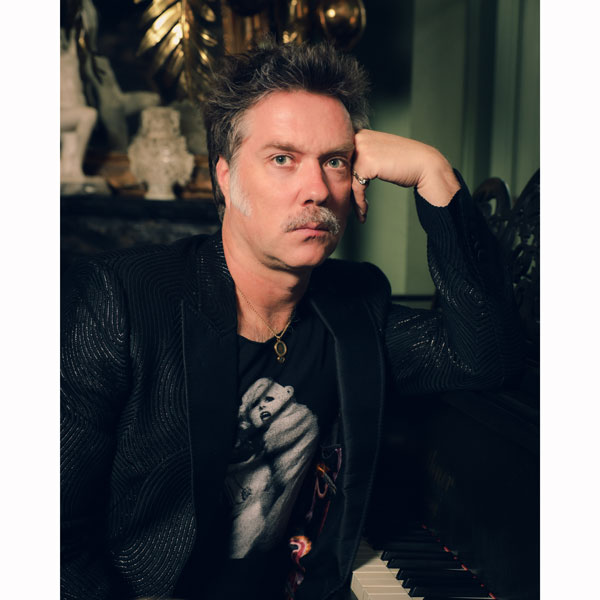
Praised as “the greatest songwriter on the planet,” by Sir Elton John, Rufus Wainwright joins the Princeton Playhouse Sinfonia for a special one-night-only engagement performing selections from his albums Rufus does Judy at Carnegie Hall and Want One, Want Two, and beyond. Princeton Playhouse Sinfonia is a dynamic new collaborative ensemble that brings together student musicians from Princeton University's Sinfonia, directed by Ruth Ochs, and Princeton Playhouse Orchestra, directed by Solon Snider Sway, alongside members of the Princeton Jazz Ensembles and local professional musicians.
On the mark of its 20th anniversary this year, Wainwright’s “Rufus Does Judy” is undoubtedly one of the most sensational shows from his incredible career, an exhilarating and loving recreation of Judy Garland’s infamous 1961 comeback concert. “Rufus Does Judy” made its premiere at Carnegie Hall in 2006 and garnered Wainwright’s first GRAMMY nomination for Best Traditional Pop Vocal Album. The full program has been performed globally including the London Palladium, Hollywood Bowl, Paris’ L'Olympia, and Toronto’s Luminato Festival. For the Colorado Symphony show, Wainwright will curate a special selection of his favorite songs from the album. 2026 will be the last time Rufus reprises this iconic show.
Rufus Wainwright’s Want One and Want Two have earned recognition as iconic albums worldwide, with Paste Magazine elevating Want One to the No. 1 album of the year, and Rolling Stone Magazine listing it in their top 5 best albums of 2003. Bowie hailed Wainwright’s song ‘Dinner at Eight’ as the “best father/son song he knew”. 22 years later, these songs have been given new life through lush symphonic arrangements by Sally Herbert (Woodkid, Florence + the Machine) and Max Moston (Antony and the Johnsons).
Combined in one program, these works form just a few of the many pillars of Rufus Wainwright’s extensive career—works that define his singular voice and fearless emotional range, merging vulnerability with spectacle, tradition with reinvention. Decades on, these songs continue to resonate as the foundation of Wainwright’s legacy.