

When Erin McKeown sees the audience dancing, she knows that she's made a connection with them. The singer-songwriter says she feels more like a musician when people dance. That may be something you'd expect to hear from the next Madonna wannabee, but Erin's music is far from the usual sounds heard in a dance club. That and the fact that most people don’t seem to dance at rock shows anymore.
“Yeah, I know,” says Erin McKeown in a phone interview. “It’s funny because to me there’s a bunch of reasons you can listen to music. You put something on when you’re cooking at night or put something on while you’re driving. You can sit down and really analyze it or you can dance. And dancing to music is such a primal reason to listen to music. I love to go out dancing and I love to experience music that way without my mind. I think that too often people are too intellectual about music and so when they’re dancing I feel we’re having a level of communication that is far deeper than an intellectual one.”
McKeown is touring in support of her latest release, We Will Become Like Birds. This is her fourth CD and one that will most likely become a staple of NPR stations across the country.
“I love music so much, and it is so much a part of who I am, that the temptation to do everything has always gotten the better of me,” explained McKeown. “With this project, I deliberately set out to narrow my focus. What would happen if I concentrated on one thing for a whole album? What would happen if I could get my mind to stand very still for 12 songs?”
She wrote all of the songs and recorded them on her 4-track at her home before gathering the group of people she wanted to record the songs. Even though she is capable of playing all of the instruments she wanted people that were wonderful players to fulfill her vision for the record. And, she wanted them to all be in the same room at the same time to give it a more organic and more live feel than most studio recordings.
“I think for every record I need to be excited and obviously that’s always changing,” she continued. “For Grand, the real excitement was that I was finding out a lot about Judy Garland and it seemed to be something to build a record around. And in the case of Grand it made sense to try out different genres of music in that exploration. For this record, the challenge was that I had a bunch of songs really about the same thing and the challenge was in making an interesting piece of art around that.”
Her music is often described as folk, a description that she’s comfortable with but not one that she feels truly describes what she does. It’s just a description that the record industry has bestowed on her work. In her eyes, records should be given much different labels. An approach that actually makes a lot of sense.
“I’ve always preferred the idea of describing music in terms of reactions versus sound,” said McKeown. “Like what if you went into a record store and there was a section for things to listen to when you’re sad or there was a break up section or a section for how much you just want to drive really fast on a sunny day. I think I might have a record in each of those sections. And I think most artists would because people are varied in terms of why we write records and in the types of records they make. So every time they put your record in the bin marked folk rock, it just doesn’t seem that useful to me.”
This will be the second time Erin McKeown has played at the Saint in Asbury Park. The first time was as part of a benefit for 90.5 The Night, the local NPR station. Those types of stations are really the lifeblood of artists like McKeown although she, like many artists, has amassed a much bigger following in Europe. Part of her success abroad has to do with the way radio is handled there.
“I have a much bigger record label over there,” she explained. “And radio and television are set up much differently. You’re also talking about countries that are each autonomous and much smaller than ours. It’s easy to be famous in Indiana, but not famous in the rest of the United States. Well, Ireland is the size of Indiana. That’s just the way I think about it. It has nothing to do with the quality or whether people in Europe are smarter or more attuned to smart music. I don’t think it’s that at all. I think it’s just the size of the media outlets.”
This time around Erin will be backed by her trio which includes guitar, organ and drums. She’ll be supplying the backbeat, it’s up to you to dance. Go ahead, show her you’re listening and dance to smart music. Maybe you’ll even help start a trend.


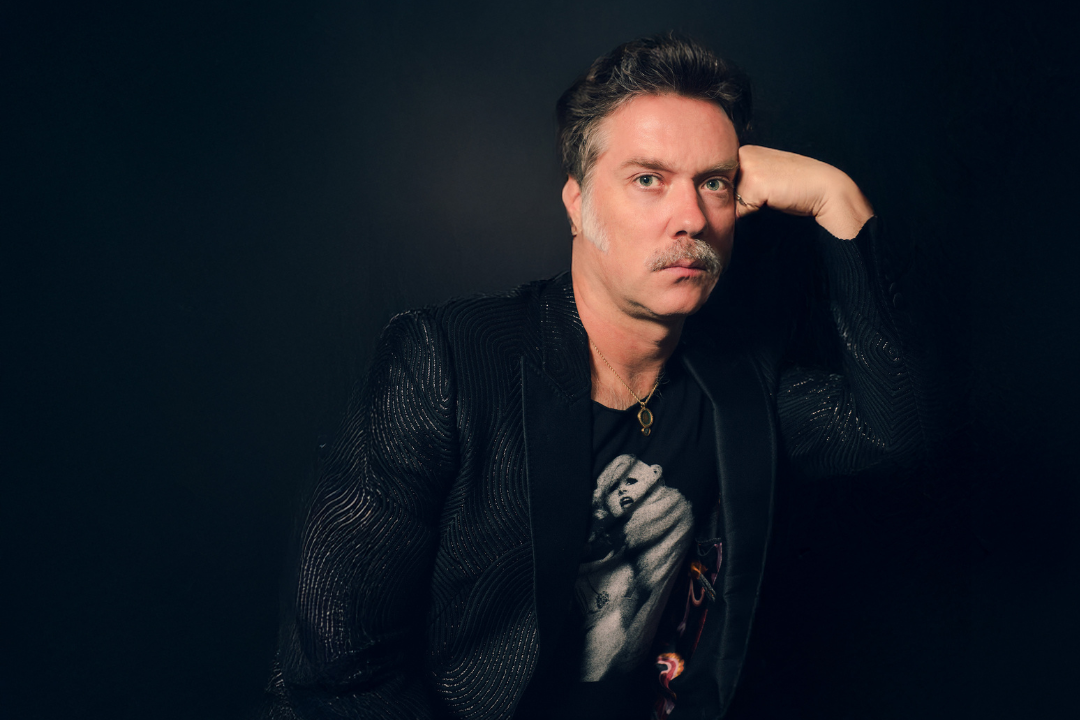
Praised as “the greatest songwriter on the planet,” by Sir Elton John, Rufus Wainwright joins the Princeton Playhouse Sinfonia for a special one-night-only engagement performing selections from his albums Rufus does Judy at Carnegie Hall and Want One, Want Two, and beyond. Princeton Playhouse Sinfonia is a dynamic new collaborative ensemble that brings together student musicians from Princeton University's Sinfonia, directed by Ruth Ochs, and Princeton Playhouse Orchestra, directed by Solon Snider Sway, alongside members of the Princeton Jazz Ensembles and local professional musicians.
On the mark of its 20th anniversary this year, Wainwright’s “Rufus Does Judy” is undoubtedly one of the most sensational shows from his incredible career, an exhilarating and loving recreation of Judy Garland’s infamous 1961 comeback concert. “Rufus Does Judy” made its premiere at Carnegie Hall in 2006 and garnered Wainwright’s first GRAMMY nomination for Best Traditional Pop Vocal Album. The full program has been performed globally including the London Palladium, Hollywood Bowl, Paris’ L'Olympia, and Toronto’s Luminato Festival. For the Colorado Symphony show, Wainwright will curate a special selection of his favorite songs from the album. 2026 will be the last time Rufus reprises this iconic show.
Rufus Wainwright’s Want One and Want Two have earned recognition as iconic albums worldwide, with Paste Magazine elevating Want One to the No. 1 album of the year, and Rolling Stone Magazine listing it in their top 5 best albums of 2003. Bowie hailed Wainwright’s song ‘Dinner at Eight’ as the “best father/son song he knew”. 22 years later, these songs have been given new life through lush symphonic arrangements by Sally Herbert (Woodkid, Florence + the Machine) and Max Moston (Antony and the Johnsons).
Combined in one program, these works form just a few of the many pillars of Rufus Wainwright’s extensive career—works that define his singular voice and fearless emotional range, merging vulnerability with spectacle, tradition with reinvention. Decades on, these songs continue to resonate as the foundation of Wainwright’s legacy.