
By Ilana Rapp
originally published: 08/01/2018
Linda Ronstadt is a Grammy Award winning household name. She started singing at coffeehouses and small venues around the age of 14, and after a brief stint at college, she decided to move to Los Angeles.
Having been diagnosed with Parkinson's Disease in 2012 and no longer able to sing, Linda wrote a book in 2013 called Simple Dreams: A Musical Memoir and has been making the rounds discussing her career.
She'll be on her book tour in the California area for the rest of 2018, but on May 2, 2019, she will be in NEW JERSEY at the Mayo Performing Arts Center in Morristown. Click here for info on the show.
I had the pleasure of interviewing Linda Ronstadt after her last book tour in New York.
Do you find singing as your passion or music or something else?
Well, communicating. I love music but I think I sing to communicate. And I like music too.
When you were sick or tired, scheduling and you're travelling, did you ever get sick of music and communicating?
I didn't get sick of music. I got sick of singing the same songs over and over again. We were always happy when we had something new in the show. It would make everything else feel new too.
Did it feel like you were forced into singing the same songs over and over again?
It's hard to play in a different hall every night because the sound changes. The thing that's fun to do is get into a really good sounding room and play music in there regularly. That's where you can really refine stuff. So the grind of playing in a different hall everything night and playing in a different city every night, that was hard. But, we did it.
I read in your book that when you were playing the very big venues that you had to change the music around.
The really subtle stuff wouldn't fly in there because there's too much ambient noise in all of those big halls. There's just a huge amount of .. there's a kind of roar. They're not acoustically developed for music. They're developed for stuffing a maximum about of bodies you can into a big spectacle. It was hard to fill those places up. They weren't very satisfying musically but they made a lot of money so automatically, as soon as they could run music acts in those venues, they'd do that. And I understand why, but it wasn't very satisfying.
Today's venues where they do all the lights and the dancing … how did YOU stay focused on music and have a humungous career without all of the pyrotechnic fire stuff going on.
Well, they knew who I was. I was always interested in music first, so there was no question. I don't express myself in that way. I don't think there's anything wrong with it, it's just isn't who I am.
Did people say to you that you have to have all of this big to-do in the background?
No, it wasn't the style then. The style was just to get up and present your music the best you could.
What about today with the big stage shows? If you were going to talk to the youth today, would they stay focused on music more or the whole show in general?
I would say that art is very personal and everybody finds their own individual things they respond to. Don't be afraid to respond. Like a lot of mainstream stuff. I like some stuff because it is a spectacle. Michael Jackson was amazing on stage; he was brilliant.
You saw him?
Michael Jackson, yeah. I saw him once.
For the music selection, how much involvement did you have with that and the arranging and the producing.
I always chose the songs, everything, for better or for worse. I had a big hand in the arrangement. Always when I worked with Nelson Riddle, he wrote the arrangements. We would have head sessions beforehand and I was very specific about different areas that I wanted to be a certain way; this would be legato, the orchestra would come in here... otherwise I'd bow to his vastly superior ability. The rock n roll stuff I had a bigger hand in the arrangements. I also had a say in the production because I was there in the process all the way from cutting the tracks to mixing at the end; mastering.
That was during solo or in the very beginning when you were touring with the band?
In the very beginning, nobody had any power over anything. We did what we were told, pretty much. When I was playing with the Stone Poneys, we would try to do our music but they had a big hand in saying they would bring in extra musicians.
How did you feel when they asked you to go solo without the other two?
I didn't have an act. I didn't have material. I didn't have the ability and the skill. I didn't know what I was doing. I felt bad to leave my bandmates behind, so I resisted that. But then when we got back from touring with The Doors, Kenny Edwards, our main guitar player, decided to go to India. He wanted to go learn something about philosophy. So he left and that broke up the band. So Bobby [Kimmel] went and got a job running a music club and that left me by myself. Kenny came back and when he did, he joined my band.
Do you have any thoughts on today's music vs. the music that you grew up with? Today's music is a lot of electronic dance music, overproduced music, people are using those tuners on their voice during their concert.
There's only so much you can polish up something that's ugly. Most of the stuff that is successful is there because of the talents of the people that are doing it regardless of whether they're tuned or have electronic tracks or whatever they have. You can't consistently make something good if you don't have talent. You know, it's garbage in, garbage out. It's a different sensibility. I don't care for that kind of music but it's more because of the generation that I am than it is musical.
If you were going to pop something into your CD player today, will it be more old music or something from today's music?
I like Sia, she's pretty good. I like Alicia Keys. I don't listen to music at home very much, to tell the truth. I listen to live music if I can get out to a concert and that's mostly classical music. I listen to music when people come over to my house and play it in my living room. Otherwise, I poke around on YouTube and look for stuff. Again, it's a lot of opera.
When you chose songs that you wanted to sing, did the writer get paid? How does that work?
You'd have to look up publishing law. I don't really know exactly how it works. When I record somebody's else song that goes on a record, the record company has to pay royalties to that writer.
In the beginning, you found songs yourself. Did you go up to somebody and say, "Hey, can I sing your song?"
They'd be singing at a party at somebody's house after a show. Somebody would pull out a guitar and say, "I wrote this song last week." I would say, "That's pretty good. I'd like to record that." It happened more in a social manner.
Then the publisher would get involved and take over from there?
I don't know.
With the current administration, what are your thoughts on health insurance for entertainment, social security and things like that?
I think it's in dire peril.
Wasn't it in dire peril anyway?
No, because they were moving more toward single payer health care plan. Medicare for all, is what I believe in. The government pays for it single payer. I think the Republicans are going to try to gut Medicare and social security. They're going to try to take it away.
I'm trying to figure out how my kids are going to survive in the music business.
Well, you better run for office or start voting. One or the other. Get them to read the New York Times, that's a good start.
That's a great idea. They each have tablets and they do have the New York Times app on there.
It's better to have the physical paper. They retain more if they see it on the physical paper. Get the subscription.
Every day or just Sunday?
Every day! Things don't just happen on Sunday.
With Parkinson's Disease, you said you knew there was something wrong because your voice was going. What happened when you got the diagnosis? Were you scared to death or not really?
There wasn't anything I could do about it. I had to accept it.
Was is scary that you knew you weren't going to be able to sing in the future?
I already couldn't sing.
What do you do now? Do you have extra time on your hands because you're not physically performing? Do you fill it with something?
I'm happy to be retired.
Is that possible? You're on a book tour!
[laughs]
Regarding people's sensitivity and emotions... with me, I really have no patience with people who are super emotional. I feel like I'm walking on egg shells with them. What about you?
I don't know. It depends on the person.
Do you get fed up with people at all?
I try to avoid those people I get fed up with.
|
And with that, Linda told me it was getting close to dinner time, so we wrapped up the interview! To order Linda Ronstadt's book Simple Dreams: A Musical Memoir, click HERE. |
About the author:


Sunday, November 22, 2026 @ 3:00pm
Algonquin Arts Theatre
60 Abe Voorhees Drive, Manasquan, NJ
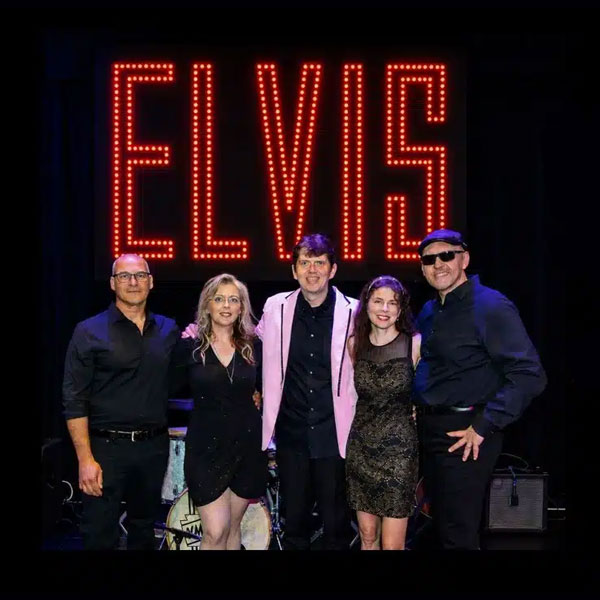
Celebrate the holidays with the electrifying sounds of Elvis Presley, starring Travis LeDoyt - widely regarded as the "world's best young Elvis." Backed by a live band, this festive concert features Elvis's most beloved Christmas classics alongside his greatest hits, delivered with the authentic voice, look, and charisma of the King's early rock 'n' roll era.

Sunday, November 22, 2026 @ 7:00pm
Mayo Performing Arts Center (MPAC)
100 South Street, Morristown, NJ
Opening Act: Oakland Rain

Sunday, November 22, 2026 @ 3:00pm
Kean Stage - Enlow Recital Hall
215 North Avenue, Hillside, NJ
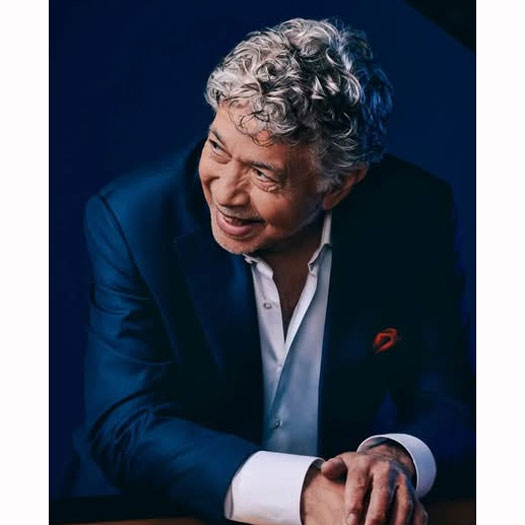
At the intersection of Jazz and Jamaican music in the 50s and 60s stood two luminary figures… guitarist Ernest Ranglin and pianist Monty Alexander. Their historic recordings over many decades literally introduced the world to what we now know as the Jamaican Ska movement… which traveled throughout the Caribbean and the rest of the world. The ingenious interweaving of jazz’s complexities with the ancestral music of the Caribbean immediately influenced legends such as Bob Marley, Toots & the Maytals, and many other artists of the time.

Friday, November 27, 2026 @ 8:00pm
NJPAC - Prudential Hall
1 Center Street, Newark, NJ
The RoadBlock Radio Concert Series brings an evening of reggae and dancehall to NJPAC this November, featuring Jamaican reggae icons Capleton, “The Fireman,” and Tarrus Riley, “Mr. Singy Singy.” Known for his commanding vocals and fiery dancehall sound, Capleton has been a defining voice in reggae for decades, with music rooted in Rastafarian spirituality and social consciousness. Tarrus Riley brings his soulful vocals and signature roots-reggae sound, best known for the beloved “She’s Royal.” Together, these two Jamaican artists promise a night of powerful rhythms, rich melodies and reggae music in the heart of downtown Newark.

Saturday, November 28, 2026 @ 7:30pm
Lizzie Rose Music Room
217 E. Main Street, Tuckerton, NJ
The Bell Bottom Blues was formed in 2007 with the vision of providing an audience with a true Eric Clapton Experience. Through its evolution, the band has been carefully constructed to create the essence of the Clapton sound, from his guitar arrangements to his distinctive vocal sound. This is what separates The Bell Bottom Blues from all others and makes us unique in the market. We have been told time and time again by our audiences and fans that “they close their eyes during a show and could swear that they were actually at a Clapton concert”. This is what we actually set out to achieve.