
The release earlier this year of his most recent record was accompanied by a lengthy tour, so as he brings his music to the masses; how does Amos himself categorize this latest effort?
"Oh man; where to start? I play the blues and my mission is to keep that genre alive and relevant in front of people in a way that feels appreciable. We did two records, one of them called, "Reverend Shawn Amos Tells It" and another one called, "Reverend Shawn Amos Loves You" that were really just me sort of romping through late'50's early '60's Chicago style blues and celebrating that particular strain of American blues and with the current album, "Reverend Shawn Amos Breaks It Down" things got maybe a little more serious in response to the times and I guess I maybe break from the blues tradition a bit more in that there's some '70's soul influences, some Staple Singers influences over the gospel influences but it's sort of meant to be a freedom songs record like the great ones from the 1960's."
Amos wasn't always a blues musician and he even had strong convictions against getting into the performance side of music but like most musicians, once it's in your system it's very difficult to remove.
"I love the blues; I became a student of the blues in college. Growing up I was a rock 'n' roll kid and really into singer songwriters but if you're serious about any music you ultimately get led back to the blues," he said with a tone of firm belief. "I became a real deep student of it in college and was introduced to them actually through books and not recordings. There was a great writer named Peter Guralnick who wrote a trilogy of books about black American music and the first one starts off with Delta Blues origins. I really soaked up his books and when I was in college in New York I would drive down to the South every spring break and summer break that I had and go to Mississippi and head to Beale Street and all of the places that Peter wrote about in his books. Then from there I was led to all the recordings, the Robert Johnson's, the Columbia recordings, the Chess recordings, so I became a deep student of it. Then that led into my professional career where I was an A and R executive for a label called Shout! Factory and I oversaw a bunch of blues re-issues. I did John Lee Hooker's career box set with his manager and his daughter, I did Johnny Guitar Watson's career retrospective with his daughter Virginia; so it was in my life a lot but not as a player. I made a pretty strong decision not to do it as a player, I was more interested in folk music and the singer songwriter scene and other forms of roots music but in 2012 I was invited by some old band mates to play the blues for the very reason that I knew a lot of that catalog and that I could put together a good song list. They invited me over to sing and play the blues and I got bitten by the bug man."
So how does a semi-reluctant blues player make an album which is different from his others? According to Amos it is a labor of love and passion.
"This album, I love recording and I love making music and any musician these days I'm sure is questioning themselves to some degree what they're getting out of recording other than the creative satisfaction because it's a tough business these days. I love recording, I love the whole process, I love writing and I love actively trying to market it, finding the place to get your message in front of people. With this album, I started recording before I knew I was making a record. I was writing songs as I said, born out of what we're going through right now and my reaction to what was happening; I felt the need to write and I felt the need to subsequently record but I thought I was recording just for me. I didn't really intend, there was no light bulb that went off like, hey I'm beginning to make a record now; I was just enjoying having experiences in different recording studios. I went to Muscle Shoals, Fame studios and got a chance to record there where all the greats like Aretha, Wilson Pickett, The Allman Brothers recorded and then I got a chance to record at Royal Studios in Memphis with Al Green's rhythm section Hi Rhythm and there were these opportunities being given to me and I didn't want to pass them up and I was doing them for the experience. So I brought songs in that I felt good about and songs that would resonate with the people that were playing with me but I really didn't think much past the idea that this was a wonderful opportunity to record. So as I collected all of these recordings I started to share them with my producer in Los Angeles for no other reason than just to share them. I was like, hey I did these things and I'm not sure what to make of them, let me know what you think. He spent some time with them and then called me into his studio and threw a few things up on the speakers that he played with a little bit and at that point I was like, OK this is probably an album that I'm making now (Laughs). At that point I went at it with more intention to figure out what songs were missing and what others that I'd like to record and sequencing and all of the things that go into making an album; so it unfolded very deceptively."
Over the years the blues have been maligned, embraced, documented and celebrated. Amos admits that it is hard to pick a performer or player whom he favors but has his opinions on who he feels stands out.
"Oh man that's a tough one, Junior Wells is the blues artist that I'm most intrigued by; as a harmonica player I love his playing. I find it really humorous and really mischievous and sort of apart from a lot of the other players of his time and I love him as a singer with his expression and as a showman. He was originally supposed to be the next James Brown and so I find him to be sort of the most fascinating for me but there's so many; Buddy, Walter, Wolf. I tend to gravitate mostly towards the Chicago blues men."
Shawn is the son of Wally "Famous" Amos, he of the chocolate chip cookie empire and a mother who had a recording career of her own. Does having this kind of parental upbringing and blood line affect how he manages or sees his career?
"Our parents always affect us, I mean forever (Laughs). My father was an agent at the William Morris Agency, he was the first black agent in the business. He worked at William Morris in New York and booked all of the Motown acts and Simon & Garfunkle; he was on the business side of music. My mother was a nightclub singer and was signed to Mercury Records and would sing in nightclubs all up and down the Eastern Seaboard and as I get further into this and look back more, I feel like the path I'm on is sort of doing equal parts to both of them. In some respects I feel like I'm finishing the work of my mother, my mother committed suicide in 2003 and she lost her career long before that because she suffered from mental illness. By the time I was born, her career was over and her mental illness was in full swing; so in some respects I feel like I'm sort of continuing the stage work and creative work that she wasn't able to continue. My father, having grown up around him in recording studios and sound stages and concert halls and all of the things that he did prior to the Famous Amos thing and including the Famous Amos thing, I got a real sense of the work; what it means to do the work. It's not just about the time on stage or speaking to interviewers or the time that's public facing, it's all the stuff that no one ever sees; the planning, the prep, the work, it lies in doing the work and how you find enjoyment in that and recognizing that stuff is really important. How well you do that plays a large part in how far you take it, there's other things as well like luck (laughs) but the work is really critical, the work is really all that you have and I got that from my father. I think my career and my choices are due in a large part to what I've experienced from both of them."
To discover more about Reverend Shawn Amos, please go to www.shawnamos.com.
That's it for this week! Please continue to support live and original music and until next week....ROCK ON!

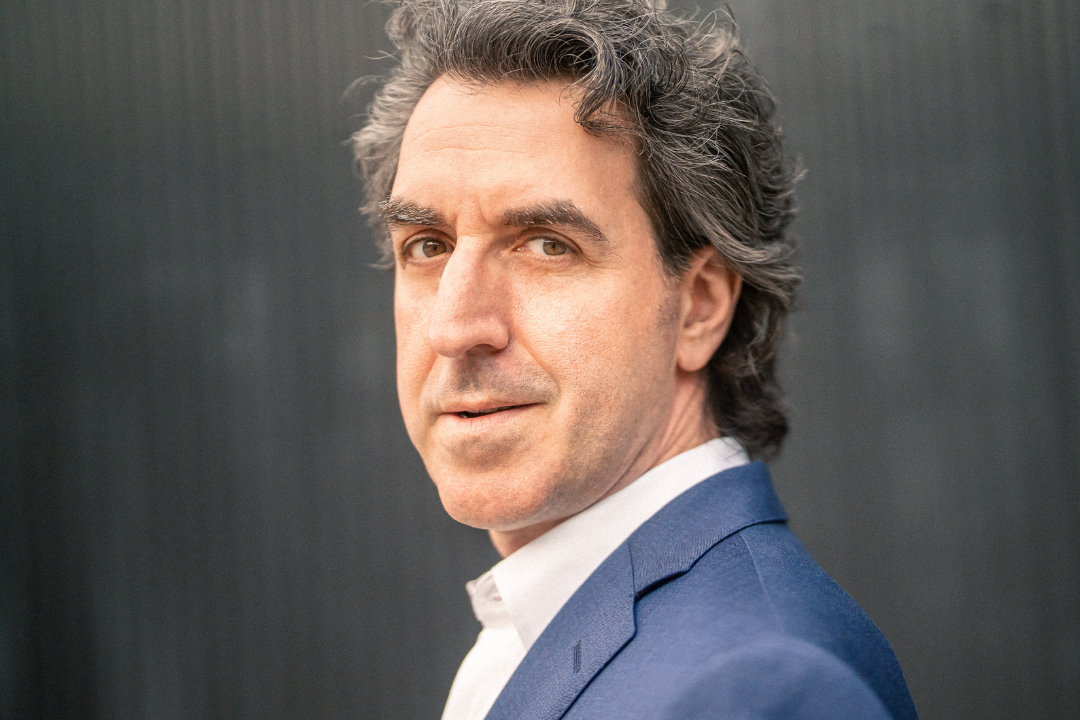
Join us for McCarter at the Museum - renowned performing artists in one-night only events at the Princeton University Art Museum.
Jason Robert Brown is a four-time Tony Award-winning composer and lyricist of The Last Five Years, Parade, Songs for a New World, 13, The Bridges of Madison County, Honeymoon In Vegas and The Connector, has performed as a soloist or with his band in venues around the world, including sold-out shows at the London Palladium and Carnegie Hall. His albums as a singer-songwriter include Wearing Someone Else’s Clothes and How We React and How We Recover on Ghostlight, and Coming From Inside the House and Live In Concert with Stephen Sondheim on Concord.
With Special Guest Tony nominee Betsy Wolfe. Tony Award-nominated actress Betsy Wolfe is currently starring as Audrey in the acclaimed Off-Broadway production of Little Shop of Horrors, following her recent Broadway run as Madeline Ashton in the hit musical Death Becomes Her. She previously originated the title role in Joy, the new musical inspired by inventor Joy Mangano, and earned a 2023 Tony Award nomination for Best Featured Actress in a Musical for her celebrated performance as Anne Hathaway in & Juliet. Other Broadway credits include starring as Jenna in Waitress, Cordelia in the acclaimed revival of Falsettos, Bullets Over Broadway, The Mystery of Edwin Drood, Everyday Rapture, and 110 in the Shade, as well as her critically acclaimed performance as Cathy in the Off-Broadway revival of The Last Five Years. Wolfe made her Metropolitan Opera debut in Die Fledermaus and has appeared as a guest artist with more than 65 symphony, pops, and philharmonic orchestras worldwide, including the New York Philharmonic and BBC Symphony Orchestra, with performances at Carnegie Hall and the Kennedy Center. Her screen credits include First One In, Estella Scrooge, CBS’s Instinct, and the film adaptation of The Last Five Years. Wolfe is also the co-founder of BroadwayEvolved, the acclaimed musical theatre training program she launched in 2018 to train and mentor the next generation of theatre artists.
A limited number of early access tickets for McCarter Director’s Circle members and members of the Museum’s Partner Circle are available, on sale Wednesday, September 16, 2026 at 12:00 PM. General public on sale begins Friday, September 18, 2026 at 12:00 PM.
Please be aware there is no public drop-off or parking at the Museum. For visitors with mobility needs, please contact the Museum at least three business days in advance of your visit to request special access to the Museum via Elm Drive. Call 609-258-3788 and select option 1 to speak to a visitor services staff member, or email Louise Barrett at [email protected].